Summary:
Why Bleach Doesn't Kill Mold on Most Surfaces
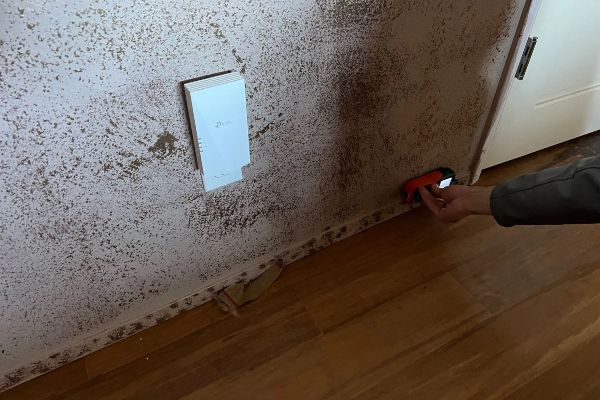
Bleach has two components: chlorine and water. The chlorine kills mold. The water dilutes it. Sounds effective, right?
On hard, non-porous surfaces like tile or glass, bleach works fine. The chlorine stays on the surface and does its job. But here’s the problem: most mold in homes grows on porous materials like drywall, wood, grout, and carpet.
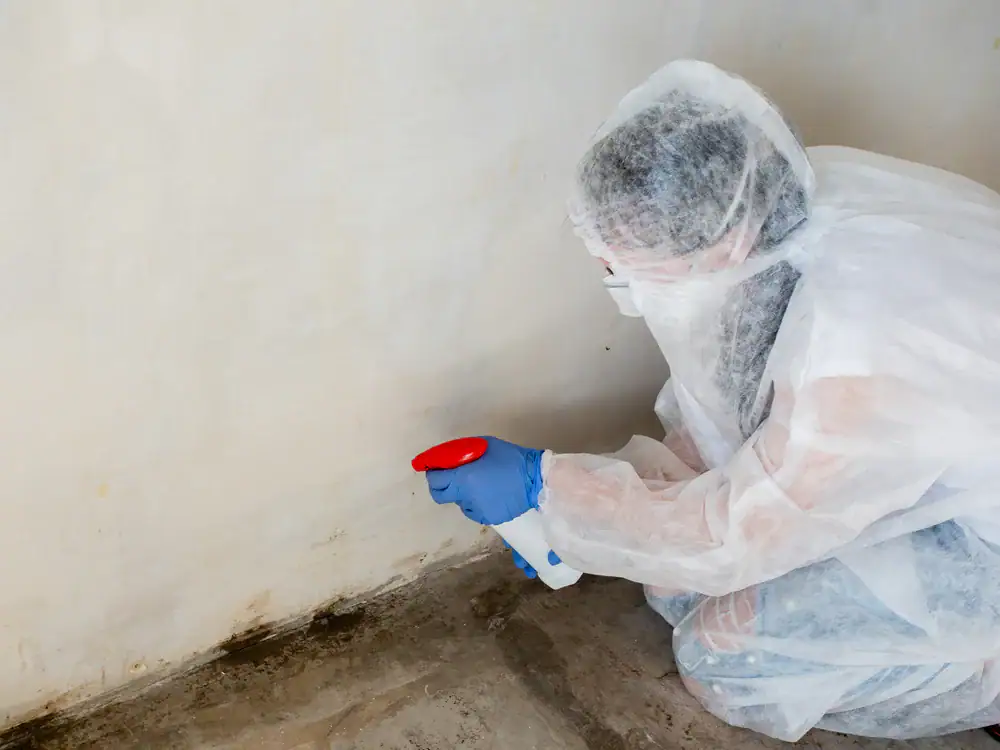
When you spray bleach on these surfaces, the chlorine molecule is too large to penetrate. It sits on top. The water, however, soaks right in. So you’re actually feeding the mold roots with exactly what they need to grow—moisture—while removing only the visible color on the surface. Within days or weeks, the mold comes back, often worse than before.
How Mold Roots Deep Into Porous Materials
Mold doesn’t just live on surfaces. It sends out root-like structures called hyphae that penetrate deep into porous materials to find nutrients and moisture. Think of it like a weed—if you only pull off the top but leave the roots, it grows right back.
When mold colonizes drywall, it burrows into the paper facing and gypsum core. In wood, those roots can penetrate several millimeters deep. Carpet and insulation become completely infiltrated. These materials absorb and hold moisture, creating the perfect environment for mold to establish itself beneath the surface where you can’t see it.
This is why professional mold removal often involves removing contaminated materials entirely rather than just cleaning them. Once mold has deeply rooted into porous materials, surface cleaning—even with professional-grade products—won’t eliminate it. The material itself has become a mold factory.
The EPA is clear on this: bleach is not recommended for porous surfaces. Neither is it considered a routine practice for mold cleanup. Yet it remains the go-to solution for most homeowners who discover mold, simply because they don’t understand the biology of what they’re dealing with.
Your drywall might look clean after you spray it with bleach. The dark stains might fade or disappear. But underneath, the mold is still there, still growing, and now it has fresh water to help it along. This is why DIY attempts so often fail—they address the symptom you can see while ignoring the actual problem.
What Happens When You Disturb Mold Without Containment
Here’s where DIY mold removal goes from ineffective to actively harmful: the moment you start scrubbing, wiping, or spraying mold, you release spores into the air. Millions of them.
Mold spores are microscopic—typically between 2 and 100 microns in diameter. For reference, a human hair is about 50-100 microns wide. These spores are so small they’re invisible to the naked eye, and they’re specifically designed by nature to float through the air and travel long distances.
When you disturb a mold colony without proper containment, those spores become airborne. They don’t just hover in one spot—they circulate through your home via air currents, through doorways, and most critically, through your HVAC system. Your heating and cooling system becomes a distribution network, pulling spores in through return vents and pushing them out through supply vents in every room.
This is exactly what professional mold remediation is designed to prevent. We seal off the affected area with plastic sheeting, shut down HVAC systems, and use negative air pressure machines with HEPA filters to capture spores before they can escape. Without these precautions, you’re essentially taking a localized problem and spreading it throughout your entire house.
The EPA explicitly warns about this: “Do not run the HVAC system if you know or suspect that it is contaminated with mold—it could spread mold throughout the building.” Yet most homeowners never shut off their HVAC when attempting DIY mold removal. They don’t realize that every time the system kicks on during or after their cleaning attempt, it’s pulling those disturbed spores deeper into the ductwork and redistributing them to rooms that were previously clean.
One small patch of mold in your bathroom can become a whole-house contamination issue in a matter of hours if handled improperly. This isn’t fear-mongering—it’s basic physics and biology. Spores are light, they’re everywhere once disturbed, and your HVAC system is extremely efficient at moving air (and everything in it) throughout your home.
Professional Mold Remediation vs DIY Methods
The difference between professional mold removal and DIY isn’t just about having better cleaning products. It’s about understanding containment, having the right equipment, and knowing how to address the root cause rather than just the visible symptom.
Professional mold remediation starts with assessment. We use moisture meters and thermal imaging to find hidden mold and identify the moisture source that’s feeding it. We check behind walls, under flooring, and in HVAC systems—places you can’t easily see or access.
Then comes containment. The affected area is sealed off with heavy plastic sheeting. HVAC systems are shut down and vents are sealed. Negative air pressure machines with HEPA filters create a vacuum effect that pulls air out of the contained area and filters it before exhausting it outside. This prevents spores from escaping to other parts of your home.
The Equipment You Don't Have Access To
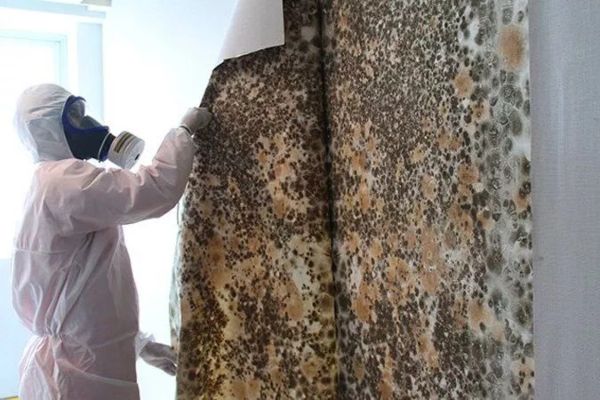
HEPA filtration is the gold standard for mold remediation. HEPA filters capture 99.97% of particles as small as 0.3 microns—which means they catch mold spores that are completely invisible to you. These aren’t the filters in your home HVAC system or the vacuum cleaner in your closet. These are industrial-grade air scrubbers and vacuums specifically designed for remediation work.
We also use antimicrobial treatments that aren’t available to consumers. EPA-registered fungicides that actually penetrate porous materials and kill mold at its roots. These aren’t the spray bottles you find at the hardware store—they’re commercial-grade products that require training and certification to use safely.
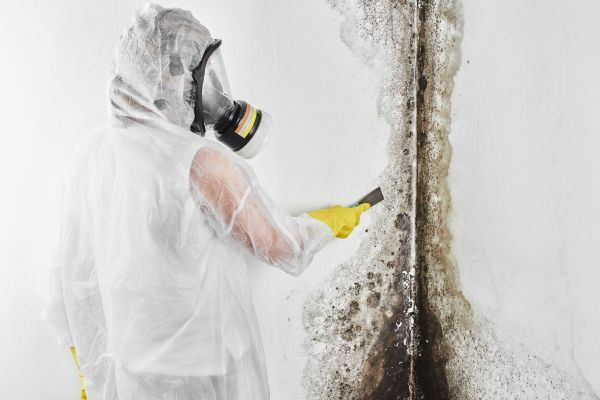
Then there’s the protective equipment. Full-body suits, respirators rated for mold spores, sealed gloves and boot covers. This isn’t just for show—it’s to prevent our technicians from inhaling spores or carrying them to other areas. Most homeowners attempt mold removal with at most a basic dust mask and rubber gloves, which provides virtually no protection against microscopic airborne spores.
The cost of this equipment is one reason professional mold remediation isn’t cheap. But it’s also why it actually works. You’re not just paying for someone to scrub your walls—you’re paying for containment systems, filtration equipment, proper disposal protocols, and expertise in addressing moisture problems so the mold doesn’t come back.
In Milwaukee County, professional mold remediation typically costs between $500 and $6,000 depending on the extent of the problem. That might seem like a lot compared to a $5 bottle of bleach. But consider what happens when your DIY attempt fails: the mold comes back, often spreading to new areas because you disturbed it without containment. Now you’re looking at a larger remediation job, more damaged materials to replace, and potentially health issues from prolonged exposure.
When DIY Is Appropriate and When It's Not
There’s a clear guideline from the EPA: if the moldy area is less than about 10 square feet (roughly a 3-foot by 3-foot patch), and it’s on a non-porous surface, you might be able to handle it yourself with proper precautions. Anything larger than that, or anything on porous materials like drywall or wood, requires professional help.
But even for small areas, you need to follow proper procedures. Wear an N-95 respirator at minimum. Use gloves and eye protection. Seal off the area and turn off your HVAC. Don’t use bleach on porous surfaces—use products specifically designed for mold on those materials, or better yet, remove and replace the affected material if it’s small enough.
Most importantly, you need to identify and fix the moisture source. If you have mold, you have a moisture problem. Maybe it’s a slow leak, poor ventilation, condensation, or humidity issues. If you clean the mold but don’t fix what’s causing it, you’re just buying yourself a few weeks before it comes back.
This is where we provide real value beyond just the cleaning. We investigate why you have mold in the first place. Is your bathroom exhaust fan actually venting outside, or is it just pushing humid air into your attic? Is there a hidden leak behind your wall? Is your basement humidity too high? These are the questions that determine whether your mold problem gets solved or just temporarily masked.
For homeowners in Greendale, WI and throughout Milwaukee County, the climate creates additional challenges. Humid summers, water intrusion from heavy rains, and older homes with potential moisture issues all contribute to mold growth. Our professional assessment takes these local factors into account and provides solutions specific to your situation, not just generic advice.
The reality is that most people who attempt DIY mold removal end up calling us anyway—after they’ve made the problem worse. The mold has spread. More materials are contaminated. The job is now bigger and more expensive than it would have been initially. That “budget-conscious” decision to handle it yourself ends up costing more in the long run.
What to Do When You Discover Mold in Your Home
If you find mold in your home, your first step should be assessment, not action. Don’t start spraying or scrubbing. Don’t turn on fans or open windows to “air it out”—that just spreads spores. And definitely don’t assume that bleach will solve the problem.
Take photos. Note the location and approximate size. Look for obvious moisture sources—leaks, condensation, poor ventilation. Then contact us so we can properly assess the situation, identify hidden mold you might not see, and determine whether this is something you can safely handle or something that requires professional remediation.
Understanding why DIY mold removal fails isn’t about making you feel helpless. It’s about giving you the information you need to make an informed decision. Sometimes that means recognizing when a problem is beyond what household products and good intentions can fix. We serve Greendale, WI and the surrounding Milwaukee County area with professional mold assessment and remediation services that address both the visible mold and the underlying causes.