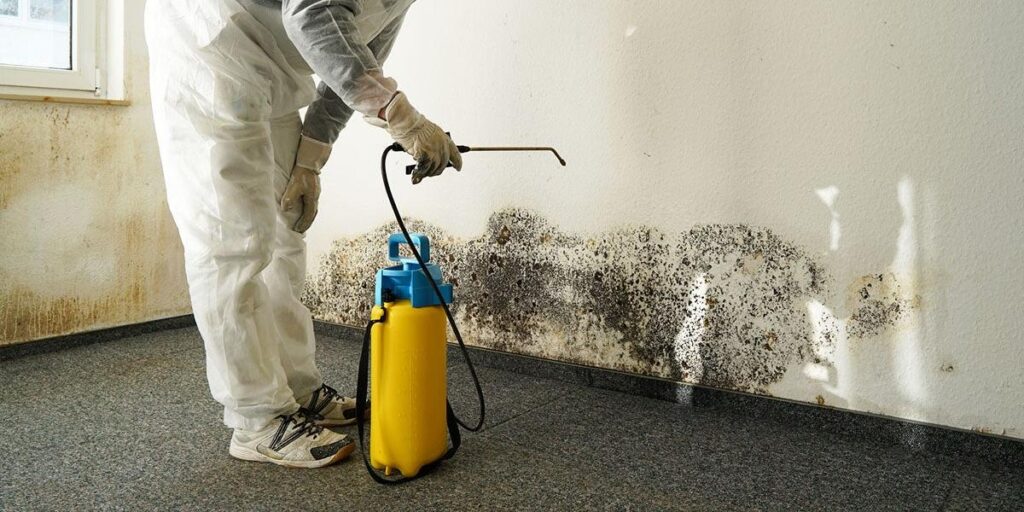
Mold removal in Milwaukee means finding the water that fed the growth, sealing the room off, taking out what cannot be cleaned, and scrubbing the air before anyone opens the door again. Flood Guys do that across Milwaukee County, 24/7.
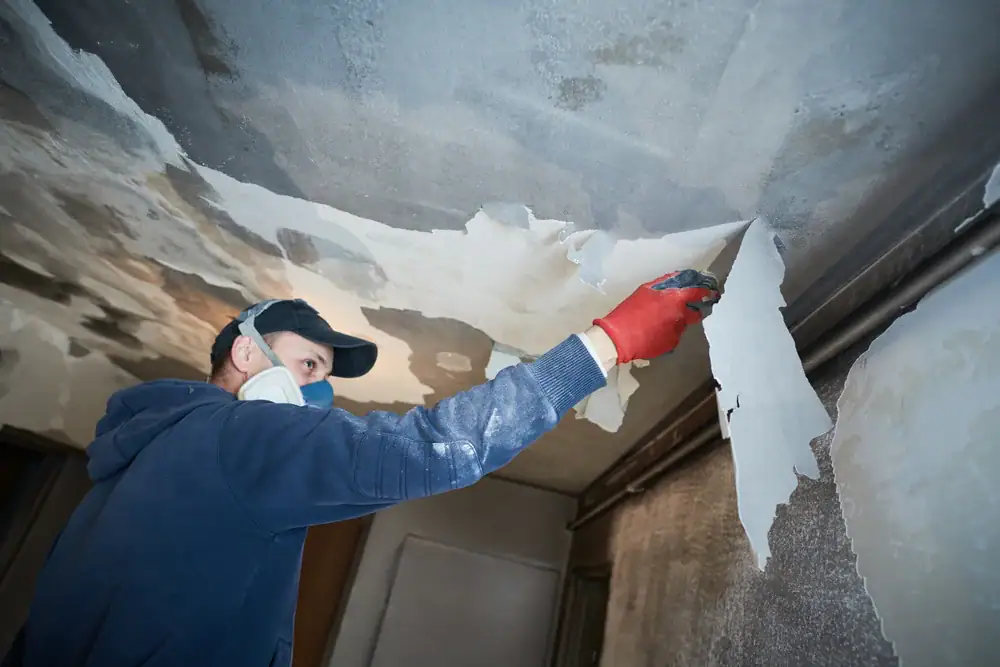
Mitigate Health Risks: Immediate intervention is crucial to protecting the well-being of occupants.
Prevent Property Damage: Rapid response stops mold from compromising the structural integrity of your home or business.
Source Elimination: We don’t just clean the surface; we identify and eliminate mold at its root to prevent regrowth.
Thorough Sanitization: Using professional-grade techniques to ensure a safe, clean, and healthy environment.
Mold needs three things: moisture, something to feed on, and time. In Milwaukee it usually finds all three in the basement. Here is what is normally feeding it.
Every mold problem starts as a water problem. A slow supply line behind a wall, a sump pump that quit during a storm, a hose bib that split over winter. Find the water first, or the mold comes back.
About a third of Milwaukee homes went up before 1940, against roughly one in eight nationally. They were not built with bathroom fans or basement dehumidifiers in mind, so damp air sits still in exactly the rooms that make the most of it.
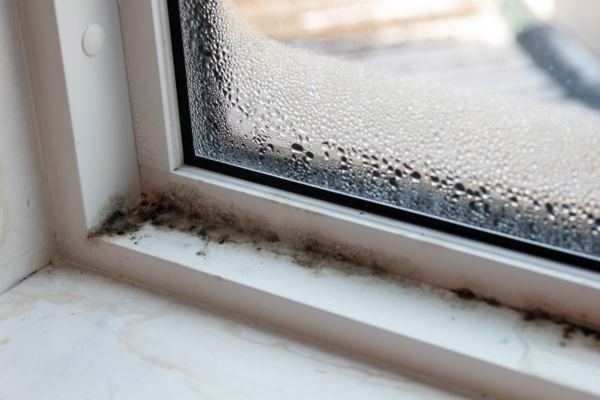
Humid summer air meets cold foundation walls and cold water lines, and the moisture comes out of the air onto the surface. That is why mold often shows up around ductwork and on basement walls before anything has visibly leaked.
Mold removal that lasts is a water job first and a cleaning job second. Remove the growth without finding the moisture that fed it and it comes back in the same place.
1. Find the water. Inspection and moisture mapping to locate the source, whether that is a slow supply leak, a foundation seepage point, or condensation on a cold surface. This is the step cheap quotes skip.
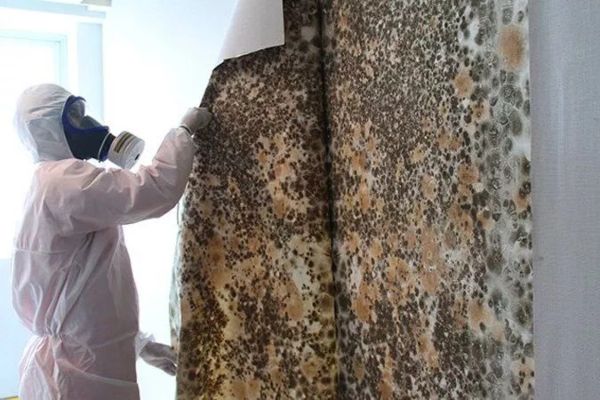
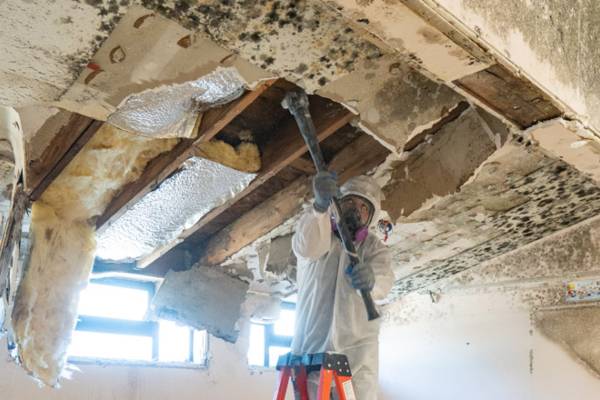
2. Contain. Physical barriers and negative air pressure with HEPA filtration before anything is disturbed. Cutting into a colony without containment is how a problem in one room becomes a problem in four, because disturbance releases spores into the air.
3. Remove. Porous materials with growth in them come out rather than being cleaned, because you cannot verify decontamination inside drywall or insulation. Non-porous surfaces are cleaned and treated. HEPA vacuuming throughout.
4. Dry and fix the cause. The area is dried to a measured target, and the moisture source is corrected. Skipping this makes everything above temporary.
5. Verify, then rebuild. Post-remediation verification confirms the work before new material goes back. Independent testing is available where a third-party clearance is wanted.
Don’t let mold compromise your health and property. Contact us now to schedule your personalized mold removal plan. Taking quick action can significantly reduce health risks and ensure a safe living environment.
Coverage for mold is narrower than for most perils, and it hinges on what caused the moisture.
The general rule insurers apply: if the mold resulted from a sudden, covered water event that was addressed promptly, such as a burst pipe you reported and had dried, remediation is often covered. If it resulted from a long-term leak, humidity or deferred maintenance, it is usually excluded as a maintenance issue.
Many policies also carry a specific mold sublimit, frequently far lower than the main dwelling limit, so mold cover can exist and still not go far. It is worth knowing your number before you need it rather than after.
This is why documentation of the original water event matters so much. If a covered leak was properly dried and logged at the time, and mold appears later, that record is what connects the two. Without it you are arguing from memory against a file.
We document the moisture source, the extent and the remediation as we go, in the format adjusters expect.
While you wait for our professionals to arrive, consider these steps to help manage the situation safely:
Try to locate the source of the moisture causing the mold growth, if possible. This may include leaking pipes or condensation issues.
Open windows and use fans to help improve airflow in the affected area, which can slow mold growth temporarily.
Do not attempt to remove mold yourself, as disturbing it can release spores into the air and worsen the problem.
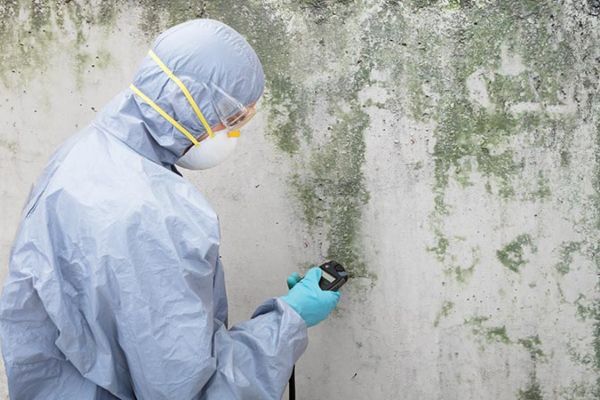
If you must enter the area, wear gloves, masks, and protective clothing to minimize exposure to mold spores.
Take photos or videos of the affected areas for your insurance records, which can assist in the claims process.
Contact your insurance provider to report the mold issue and discuss potential coverage options.
Because disturbing a colony is what makes it airborne. Mold reproduces by releasing spores, and cutting, scrubbing or pulling at growth releases a great many of them at once into the air of your house.
Without containment those spores travel on air currents and settle in rooms that had no problem at all, where they will grow if they find moisture. That is how a contained bathroom issue becomes a whole-floor issue, and it usually happens during a well-intentioned weekend cleanup.
There is also the health side. Disturbance produces a short, high exposure, and the people most affected are those with asthma, allergies or compromised immunity, who are often the reason the household noticed the problem in the first place.
Proper work contains the area under negative pressure with HEPA filtration first, so that air flows into the work zone rather than out of it, and everything released is captured rather than distributed.
Containment is a sealed work zone, not a closed door.
Physical barriers of sheeting are sealed at the edges around the affected area, with a zippered entry. Air scrubbers with HEPA filtration then establish negative pressure inside it, so air flows in through any gap and out through the filter, rather than drifting into the rest of the property. That is what makes an open door safe when a technician has to walk through it.
Crews wear respiratory protection and disposable coveralls, and material leaving the zone is bagged and sealed inside it. Where the affected area is large, a decontamination chamber is built at the entry.
The HVAC system is shut down for the affected zone, because otherwise it would move spores through the whole building, and ductwork is inspected if there is any reason to think it has been carrying them.
Often yes, provided the growth is genuinely confined and the moisture source is dealt with at the same time.
What makes it feasible is containment. A properly sealed zone under negative pressure means the rest of the house is not exposed while the work runs, so people can normally stay in the property, using other rooms.
What changes that answer: growth that has spread through the HVAC system, contamination across multiple rooms, or a household including anyone with asthma, a respiratory condition or compromised immunity. In those cases staying elsewhere for the duration is the sensible call, and if the property is genuinely uninhabitable, additional living expenses are covered under many policies.
We will give you a straight answer on this at the assessment rather than a default. It depends on your building and who lives in it.
Mold is usually smelled or felt before it is seen, because most of it grows where you cannot look.
Smell is the most reliable early sign. A persistent musty or earthy smell, particularly one that is stronger in a basement, in a closet, or when the HVAC first kicks on, means active growth somewhere in the air path.
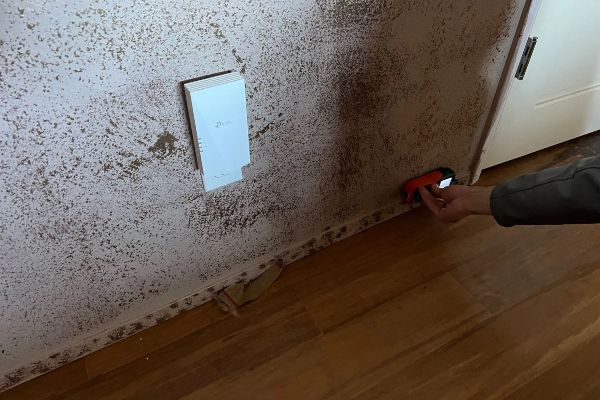
Visual clues beyond obvious spots: dark streaks on walls near cold spots, which is often condensation-driven, bubbling or peeling paint, wallpaper lifting at a seam, and any staining that reappears after you paint over it.
Health clues: symptoms that improve when people leave the building and return when they come back. That pattern is worth taking seriously.
History: any past water event that was not dried properly. A leak that was mopped up and left is the most common origin story we hear.
If you can smell it and cannot see it, that is exactly when an inspection is worth the hour.
Insurers separate sudden and accidental from gradual, and mold sits awkwardly across that line because it takes time to grow.
Mold that follows a sudden covered event, reported and dried promptly, is often covered. Mold that grew from a slow leak, from humidity, or from a water event nobody addressed, is usually declined as maintenance. The insurer is not asking whether you knew, they are asking how long it was happening.
Most policies also carry a mold sublimit well below the dwelling limit, so partial cover is common.
The practical consequence is that the record of the original water event is worth more than any argument later. If you have a leak dried properly and logged, keep that documentation. If mold appears afterwards, it connects the two events, and that connection is the claim.
Because removing visible growth treats the symptom. Mold needs moisture, a food source and time, and of those three the only one you can realistically take away is the moisture. Drywall, wood and dust are food, and they are not going anywhere.
So the water gets found first: a slow supply leak, foundation seepage, a roof issue, or condensation where humid summer air meets a cold foundation wall or an uninsulated water line. Milwaukee County produces a lot of that last one, and it is the cause people most often miss because there is no leak to find.
Then the area is dried to a measured target and the source is corrected, whether that is a repair, better drainage, insulation on a cold line, or ventilation.
Only then is remediation permanent. Clean without fixing the water and you will be looking at the same wall within a year, which is the most common reason we are called to a property that has already had mold work done.
Don’t let mold compromise your health or your home. Reach out to us today for a comprehensive assessment and effective mold removal solutions. Our expert team is ready to help you reclaim your space and ensure a safe, mold-free environment. Contact us now to get started!