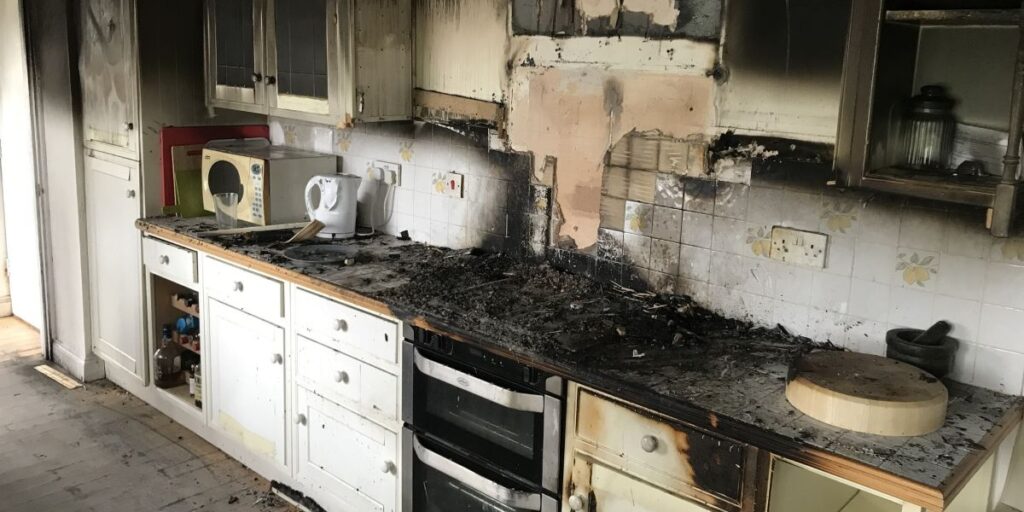
Fire damage restoration in Milwaukee starts after the engines leave: secure the building, dry the water the hoses left behind, clean soot out of surfaces and ducts, kill the odor, then rebuild. Flood Guys answer 24/7 across Milwaukee County.
24/7 Emergency Services: Round-the-clock availability to ensure help is there the moment you need it.
Rapid Response Time: Immediate action to secure the property and prevent further, unnecessary damage.
Urgent Mitigation: Starting the restoration journey quickly to minimize long-term structural impact.
All-Inclusive Restoration: Expertly addressing every facet of fire damage, from initial cleanup to final repairs.
Smoke & Soot Removal: Specialized cleaning to eliminate toxic residues and persistent odors.
Structural Repair: Professional assessment and reconstruction to return your property to its original integrity.
A fire does three kinds of damage and only one of them is the fire itself. The other two are wherever the smoke reached and whatever the water left behind.
Heat weakens framing, floors and support beams even where nothing burned through. The building has to be checked and made safe before anything else starts, and the openings boarded and tarped so the next rain does not add to the bill.
Soot is acidic and it travels. The ductwork carries it into rooms the fire never reached, and it keeps etching metal, glass and finishes until it is cleaned off. Smoke odor stays in porous material long after the surfaces look clean.
This is the part nobody expects. Hoses and sprinklers put hundreds of gallons into the building, and once the fire is out all of that water is in the floors and walls. Left to sit, it becomes a mold problem within a couple of days.
Five phases, in this order, because each one would undo the last if you ran them backwards.
1. Secure the building. Board the openings, tarp the roof where the crews cut through it, fence off anything unstable. This happens within hours. A fire-damaged building left open routinely loses more to a week of weather and to theft than it did to the fire, and preventing that is usually your responsibility once you know about it.
2. Remove the water. Suppression puts hundreds or thousands of gallons into the structure, and it is the part homeowners never anticipate. Within a day or two it is doing its own damage to floors, ceilings and insulation, so a fire job is also a drying job, run to the same measured targets as any water loss.
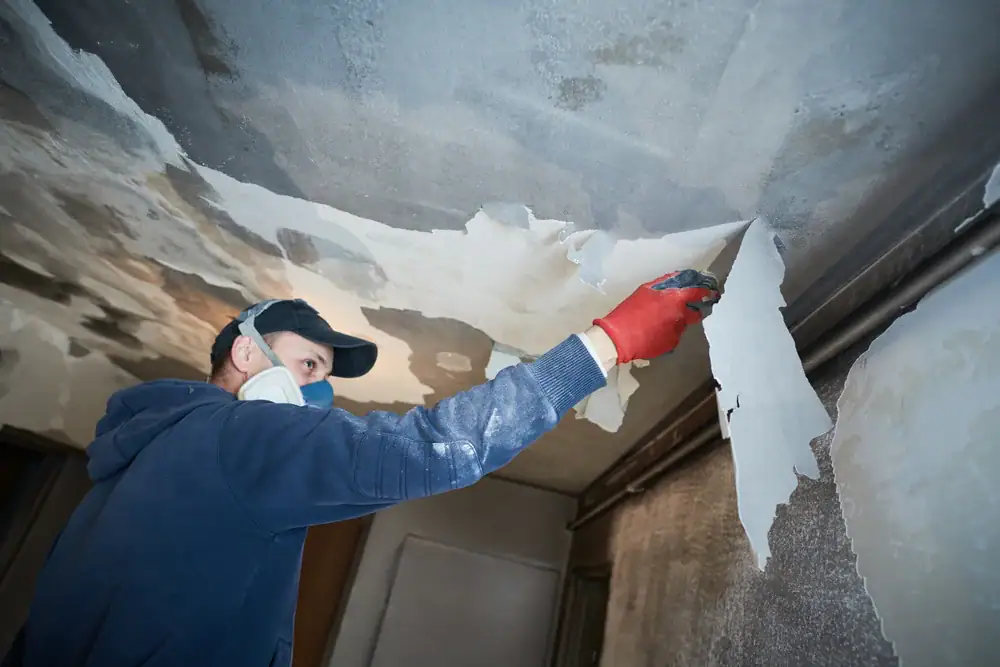
3. Debris removal and soot cleaning. Unsalvageable material comes out, then every remaining surface is cleaned with chemistry matched to the residue type. Dry methods come first, always: water on oily soot spreads it and drives it into the surface, turning a residue that would have lifted into a stain that will not. Soot is acidic and keeps etching metal, glass and finishes for as long as it sits, so this phase is time-sensitive rather than cosmetic.
4. Deodorize. Source first, then air, then seal. Anything holding odor that cannot be cleaned comes out, remaining surfaces are cleaned, then air treatment handles what is left. The HVAC system is inspected and usually cleaned, because it will otherwise redistribute the smell through everything you just paid to clean.
5. Reconstruct. Framing repairs, electrical made good by a licensed electrician, insulation, drywall, flooring and paint, matched to the rest of the property, then a walkthrough with you before we close it out.
Don’t wait to address fire damage. Reach out to us now to schedule your personalized fire damage restoration plan. Acting quickly can greatly reduce further damage and help ensure a smoother restoration journey.
Fire is one of the better covered perils on a standard homeowners policy, which is genuinely good news in the middle of a bad week. Most policies cover sudden accidental fire damage to structure and contents, and they generally cover the water damage from putting the fire out, since it flows from the same event.
Three parts are worth raising with your adjuster early rather than late. Emergency mitigation, meaning board-up and tarping, is normally covered and expected, and insurers want it done fast. Additional living expenses are included in most policies when the home is uninhabitable, and people routinely fail to claim what they are entitled to. Contents are usually settled separately from the structure and need their own inventory, which is far easier to build while items are still in place than afterwards from memory.
Fire claims run larger and longer than water claims, so the documentation matters more. We photograph before anything moves, itemize what is removed and why, and log moisture and cleaning results throughout, in the format adjusters expect. We bill the carrier directly where your policy allows, work with every carrier, and are not on anyone’s preferred vendor list.
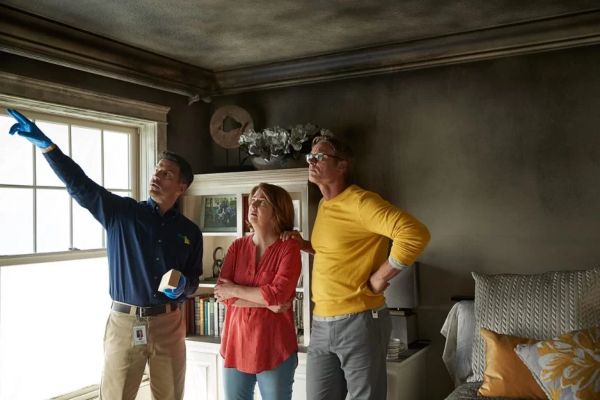
While waiting for our professionals to arrive, consider these steps to help contain damage safely:
Try to limit activity within damaged areas to prevent soot from spreading and embedding further into surfaces.
Use sheets or plastic to cover furniture and floors, limiting further soot deposits and protecting valuable items.
If safe to do so, open windows to help release smoke and reduce lingering odors in affected areas.
Soot particles can easily smear, worsening stains. Leave soot cleanup to professionals with specialized equipment.
Take photos or videos of affected areas for insurance purposes to ensure thorough documentation of losses.
Reach out to your insurance provider as soon as possible to report the damage and initiate the claims process.
Household sprays add a fragrance on top of the smell. They do nothing to the smoke particles causing it, which is why the smell always comes back, usually on the first warm humid day.
Smoke particles are extremely fine. They penetrate porous materials, settle inside wall cavities, and get drawn into ductwork and insulation. The odor is not in the air, it is in the building, and it re-releases into the air continuously.
Real deodorization runs in a fixed order. Source removal first, because no amount of air treatment beats a source that is still there. Then every remaining surface cleaned with chemistry matched to the residue type. Then air treatment with equipment such as hydroxyl or ozone generators for what remains. Then, where odor has genuinely soaked into framing, sealing with a shellac-based primer before the wall closes. That last step is legitimate and effective, and it is a final step rather than a shortcut past the cleaning.
No, and understanding why saves a lot of disappointment. A fire does three separate kinds of damage and they need three different responses.
Structural: heat weakens framing, floors and beams even where nothing burned through, so affected members get assessed before anyone works beneath them. Smoke and soot: acidic residue distributed by the ductwork into rooms the fire never reached, needing cleaning matched to the residue type. Water: hundreds of gallons from suppression, needing extraction and measured drying exactly like a flood.
A single visit with a bucket addresses none of those properly. Each phase also gates the next, so cleaning before drying, or rebuilding before deodorizing, means doing it twice.
Where a fire genuinely was small and contained, the job can be short. What decides it is the smoke and water spread, not the size of the burn.
Contents are handled as their own workstream, and they are usually the larger half of a fire claim.
Everything is inventoried and photographed where it stands, before it moves, because that inventory is what your contents claim is built from. Salvageable items are packed out and cleaned off site, which also clears the property so reconstruction can run. Items that cannot be saved are listed with the reason.
Two categories deserve special handling. Electronics pull soot into their cases through the cooling fans, and acidic residue on a circuit board corrodes it, with failure often arriving weeks later. Leave them off and unplugged, because powering one up is what turns contamination into a short. Documents and photographs do far better than people expect if they are stabilized quickly rather than left to dry.
Textiles, clothing and soft furnishings usually need specialist cleaning rather than a domestic wash, because the odor is in the fibers.
A fire scene is a genuine hazard even after the flames are out, which is why re-entry waits for clearance rather than for impatience.
The risks are structural instability in heat-weakened framing, electrical hazards in damaged wiring, air quality from fine soot particles and whatever combusted, and standing water sitting around live circuits. In older housing stock there is also the possibility of disturbing asbestos or lead paint during demolition, which changes how the work has to be handled.
Crews use respiratory protection and full PPE, contain the work area, and run HEPA air filtration throughout, both to protect themselves and to stop cleaning pushing residue into unaffected parts of the property. Utilities to affected areas stay off until the systems have been checked, and wiring in a fire-affected area is assessed by a licensed electrician before any wall is closed.
Our technicians hold IICRC certification, which is the restoration industry’s training standard rather than a permit anybody can buy.
Yes, and it is more common than people assume, particularly in duplexes and closely spaced housing.
Smoke travels far beyond the fire. Wind-blown smoke and soot enter through vents, gaps and open windows, and once inside they behave exactly like smoke from your own fire: settling on surfaces, penetrating soft furnishings, and being drawn into the HVAC system.
On insurance, damage from a neighboring property’s fire is generally covered under your own policy as a sudden accidental event, and you claim through your own carrier rather than chasing theirs. Your insurer may pursue the other party afterwards, which is their business rather than yours.
The practical advice is the same as for any smoke exposure. Do not run the HVAC system until the ductwork has been checked. Do not wipe oily residue with a wet cloth, because that sets a stain. Photograph everything before it moves, and get the residue identified before anybody starts cleaning.
Yes, and on a fire claim that coordination is a substantial part of the value.
Fire claims are larger, longer and more complex than water claims. They usually involve structure and contents settled separately, they often run for months, and they carry entitlements such as additional living expenses that people frequently miss.
We document from the first visit in the format carriers expect: photographs before anything moves, an itemized removal record with reasons, moisture logs through the drying phase, and cleaning results. Adjusters approve scopes faster when the evidence arrives ready to use, and the most common cause of a stalled claim is missing evidence from the first days.
We bill the carrier directly where your policy allows, so you are not fronting a fire-sized invoice and waiting on reimbursement. We work with every carrier and we are not on anyone’s preferred vendor list, which keeps the scope pointed at your property rather than at a claims target.
If your home has suffered fire damage, don’t hesitate to reach out to us for professional assistance. Our experienced team is ready to respond swiftly and effectively, guiding you through the restoration services process with care and expertise. We understand the emotional and physical toll that fire damage can take, and we are here to help you recover and rebuild. Contact us today to discuss your needs and schedule a consultation. Let’s work together to restore your property to its former glory.