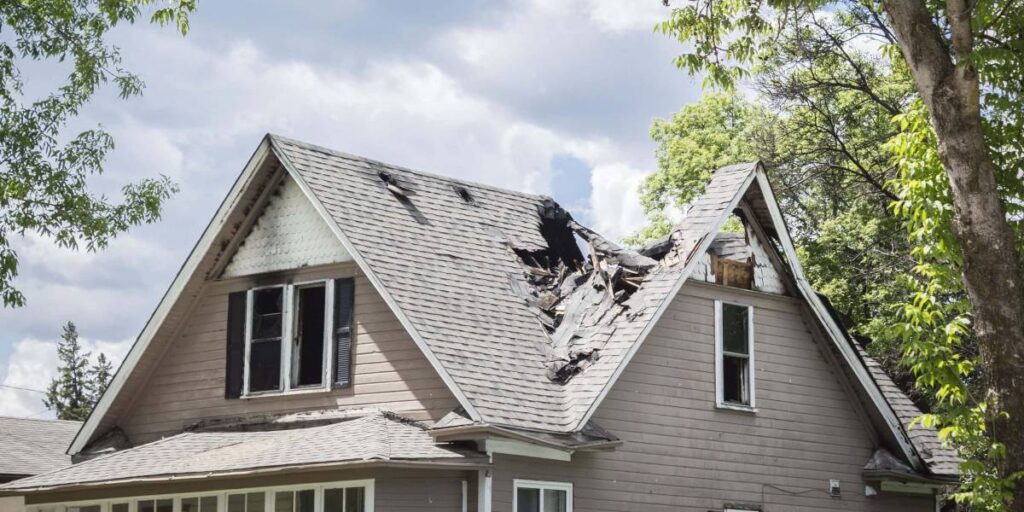
Storm damage repair in Milwaukee starts with stopping more water getting in: tarp the roof, board the openings, then extract, dry the structure and repair what the wind and rain broke. Flood Guys answer 24/7 across Milwaukee County.
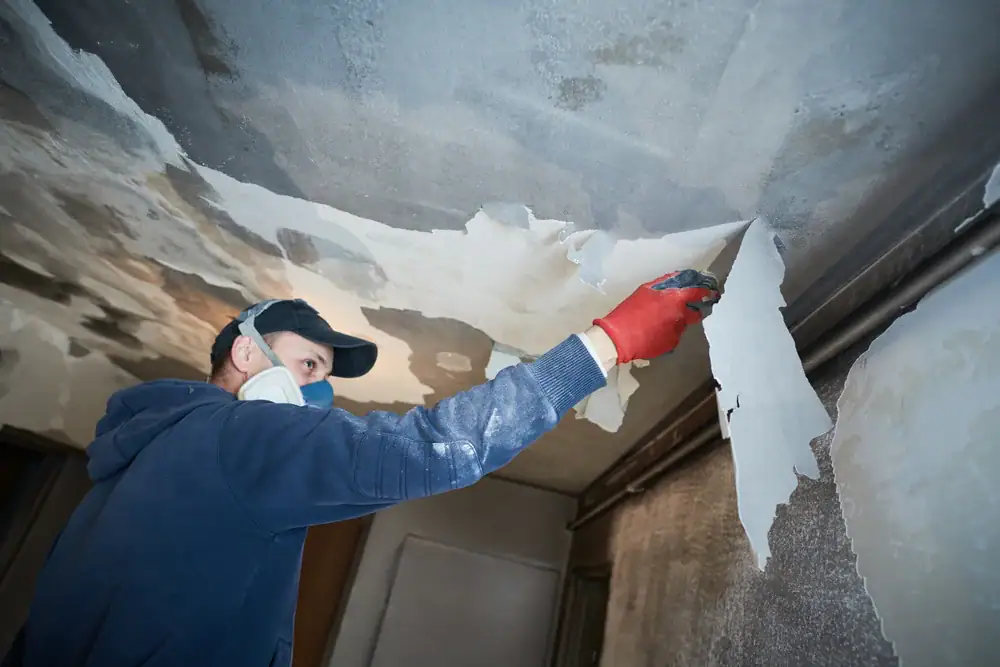
Storms can strike at any time, which is why our emergency storm damage cleanup services are available 24/7. Whether it’s heavy rain, hail, wind, or flooding, our team is ready to respond immediately to minimize further damage and restore your property efficiently. We understand the urgency of the situation and are equipped to handle various types of storm damage, providing comprehensive solutions tailored to your needs.
Professional Damage Repair: We specialize in cleaning up and restoring property affected by heavy rain, hail, high winds, and flooding.
Mitigate Further Damage: Our immediate intervention helps prevent secondary issues, such as mold or structural deterioration, saving you time and money.
Expert Restoration Professionals: Trust our experienced team to handle your cleanup with the highest level of care, technical expertise, and attention to detail.
Safety & Security Focused: Our primary goal is to ensure your home or business is safe, secure, and fully restored to its pre-storm condition.
Milwaukee storms tend to do damage in a set order. The wind opens the building up, then the rain gets in. Both halves need dealing with the same day.
Heavy rain onto ground that is already saturated has nowhere left to go, so it finds window wells, basement stairwells and foundation cracks. Outdoor floodwater counts as contaminated, which means soaked carpet and pad come out rather than get dried.
Straight-line winds cause far more damage here than tornadoes do. They lift shingles, drive rain sideways under siding and through window seals, and leave gaps you cannot see from the ground. That leak often shows itself days later.
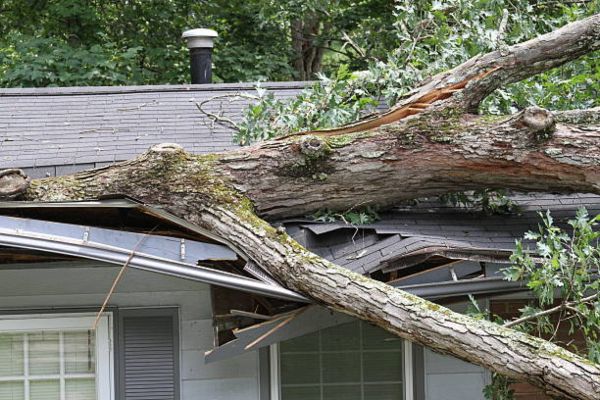
Saturated ground plus high wind is what actually brings a mature tree down. A limb through the roof is an emergency because the hole keeps letting water in. Stay out from under it, and let someone check for power lines before anyone goes up.
Storm work runs in a different order from a normal water loss, because the building is still open to the weather when we arrive.
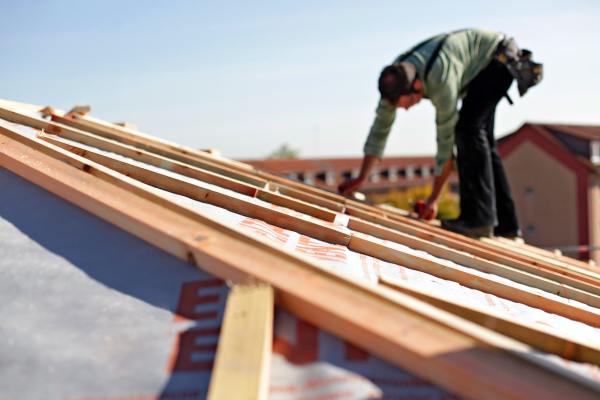
1. Make it safe and close it up. Downed lines are treated as live and reported, not stepped over. Then tarps on the roof and board over broken openings, because everything left open keeps taking on water and is usually your responsibility to prevent once you know about it. On a bad night this is the whole first visit for a lot of properties.
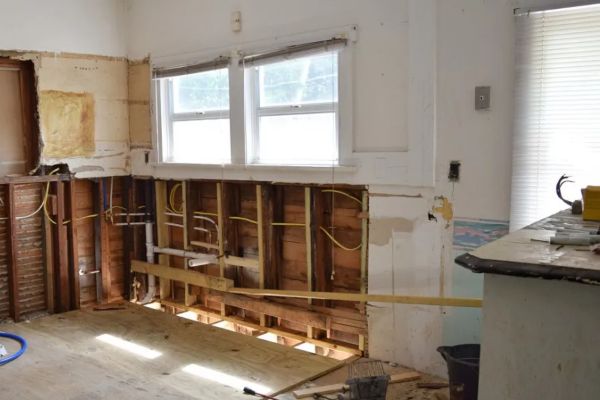
2. Extract and remove. Standing water out, then the materials that cannot be saved. Storm water has crossed ground, roofs and gutters, so it is treated as contaminated: carpet, pad, saturated drywall and wet insulation come out rather than being dried.
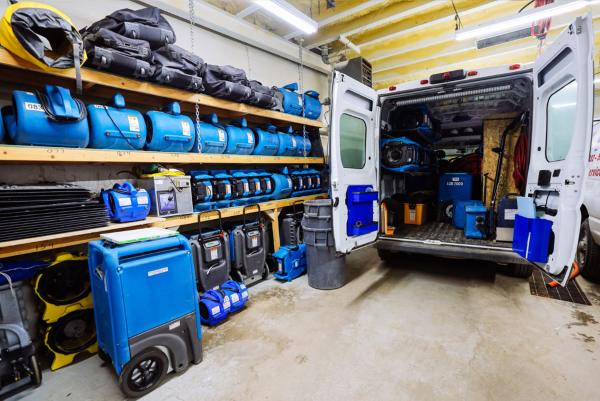
3. Dry to a target. Air movers and dehumidifiers sized to the space, readings taken daily against unaffected parts of the property. Wind-driven rain gets into wall cavities through the same gaps it came in by, so the drying scope is usually wider than the visible damage.
4. Repair. Roof, siding, windows, then the interior: framing where needed, insulation, drywall, flooring, paint. One crew across the whole job, so the roof and the ceiling below it are not two contractors blaming each other.
After a countywide storm every restoration company is working a queue. Being early in it is worth more than any discount you will be offered.
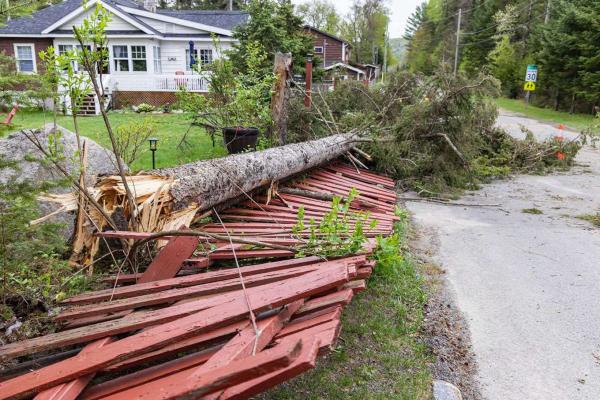
Don’t let storm damage disrupt your life. Contact us now to schedule your storm damage cleanup plan. Taking immediate action can significantly reduce the extent of the water damage and expedite your recovery.
Storm damage is usually better covered than flooding, and the distinction turns on how the water got in.
Wind-driven rain through a breach is normally covered. If wind removed shingles or a branch went through the roof and rain came in through that opening, a standard homeowners policy generally treats it as sudden accidental damage and pays for both the breach and the interior damage.
Water that rose from the ground is not. Surface water and groundwater are excluded from standard policies and need separate flood insurance, regardless of the fact that the same storm caused both. It is entirely possible to have one covered claim and one excluded one from a single night.
Emergency mitigation is normally covered and expected. Tarping and board-up are what stop the loss growing, so insurers want them done immediately, and failing to protect the property after you know about the damage can reduce what they pay.
Because the source decides the policy, documenting where the water entered is not paperwork, it is the claim. We photograph the breach, the entry path and the interior damage before anything is moved, and bill your carrier directly where the policy allows.
While you await our professionals, consider these steps to help manage the situation safely:
Stay clear of damaged areas, fallen trees, and downed power lines to avoid potential hazards.
Take photos or videos of the storm damage for insurance purposes, which can assist in filing claims.
Contact your insurance provider to report the damage and begin the claims process as soon as possible.
If safe, open windows to allow fresh air to circulate, especially if water has infiltrated your property.
Get people out first and worry about the property second. Structural damage from a fallen tree or high wind is not always visible from inside, and a compromised roof or wall can come down later rather than at the moment of impact.
Treat every downed line as live, keep well clear, and report it to the utility. Do not touch anything metal in contact with a line, and do not assume a line is dead because nothing is arcing.
If any part of the flooded area has outlets, appliances or a furnace in or near water, do not enter it. Shut off power to affected circuits only if the panel is somewhere safe and dry to reach.
Once you are safe, photograph everything before it moves, including the outside of the building and the point where water got in. That entry point is what decides which policy applies, and it is the first thing to disappear when a tarp goes on.
Moisture meters on the materials themselves, and thermal imaging to scan quickly for suspect areas. Imaging reads surface temperature rather than moisture, so anything it flags is confirmed with a meter before it goes into a scope.
Storm water hides differently from a burst pipe. Wind-driven rain enters high and runs down inside the wall cavity, so the wet material can be a floor below the breach with nothing visible in between. Water tracks along the top of ceilings and appears in a room nowhere near the actual hole.
Every affected material is compared against an unaffected part of the same property, because dry is relative to your building rather than a fixed number. Readings are taken daily and logged, and that log is both what tells us when to pull equipment and the evidence the property was dried properly.
Yes, and your own photos still matter, so take them anyway before anything moves.
Our technicians document the breach, the entry path, the interior damage and every material removed, with moisture readings through the drying phase. That set goes to your adjuster in the format they work from.
Two things make storm claims different. Volume: after a countywide event adjusters are working through hundreds of claims, and the ones with complete documentation move first. And the source question: because wind-driven rain is usually covered while groundwater usually is not, evidence of where the water entered can be the whole claim.
Photograph the outside as well as the inside, including the roof if you can do it safely from the ground, and do that before the tarp goes on, because the tarp hides the evidence that proves the breach.
Secondary damage is what arrives days or weeks after the storm, from water that was never found.
The usual examples: mold in a wall cavity that stayed wet, insulation that compressed and stopped working, subfloor that swelled and lifted the flooring above it, and framing that stayed damp long enough to rot. There is also the slower structural version, where a roof or wall was weakened but not obviously damaged.
It matters for your claim as much as your building. A claim closed on visible damage alone can be difficult to reopen when the real scope shows up two months later, which is why a proper assessment with meters at the start is worth the hour even when the damage looks obvious.
Materials that stay wet can begin growing mold within roughly 24 to 48 hours, which is the window the whole emergency phase is built around.
Two phases, and they are usually handled and paid differently.
Mitigation is the emergency work: tarping, board-up, extracting water, removing what cannot be saved, and drying the structure. It happens in hours and days, it is what stops the loss growing, and insurers normally cover it and expect it to be done immediately.
Restoration is the rebuild: roof, siding, windows, then drywall, flooring, trim and paint. It runs on a longer calendar, usually set by material lead times rather than labor, and it cannot start until the drying readings hit target.
The gap between them is where storm jobs most often go wrong, because a lot of companies do only one half. We do both with one project manager, so the roofer and the interior crew are the same job rather than two contractors pointing at each other over who left it open.
The emergency phase is usually days. The rebuild is usually weeks, and occasionally months, and the difference is almost never the labor.
Drying typically runs three to seven days depending on how much water there was, what got wet, and how long it sat. That part we can estimate accurately after the first set of readings at hour 24.
The rebuild depends on two things outside anyone’s control: how quickly the insurance scope is agreed, and material lead times. After a countywide storm both get worse at once, because every roofer and supplier in the region is working the same backlog.
We give you a range at the start and update it when something real changes, rather than quoting a best case and letting it slide. If we are waiting on a material or an adjuster, we tell you that is what we are waiting on.
Storm damage does not wait for business hours and neither do we. Call any time and we will tarp the roof, board the openings and get the water out before it soaks into the framing. If the storm backed up your drains as well, we handle sewer backup cleanup too.