Summary:
You found mold. Or maybe you just suspect it—that musty smell, the discolored patch behind the bathroom sink, or respiratory symptoms that clear up when you leave the house. Either way, you’re probably wondering what comes next, how much it’ll cost, and whether you can trust whoever shows up to fix it.
Here’s what matters: mold isn’t something to panic about, but it’s not something to ignore either. The key is understanding what you’re dealing with, knowing when you need professional help, and finding someone who’ll give you straight answers instead of an inflated estimate. Let’s start with how to actually find mold in the first place.
Mold Detection: Finding What You Can't Always See
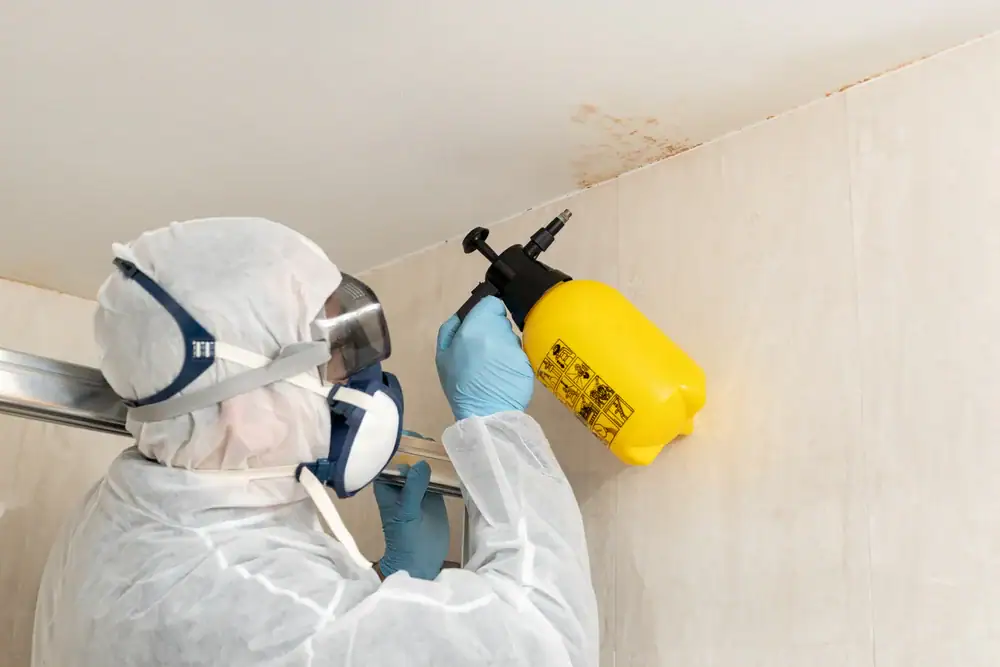
Most people think mold detection starts with seeing fuzzy black spots on a wall. Sometimes it does. But mold is sneaky, especially in Milwaukee County homes where it loves to hide in attics after ice dams, behind finished basement walls, or inside wall cavities near windows that condensate all winter.
The most practical detection method is using your eyes and nose. Look for discoloration, staining, or fuzzy growth on surfaces—it might be black, green, gray, brown, or even white. Check the usual suspects: bathroom ceilings, basement corners, around windows, under sinks, and anywhere you’ve had water problems. That musty, earthy smell is often your first clue that mold is growing somewhere, even if you can’t see it yet.
If you’re experiencing symptoms—nasal congestion, coughing, itchy eyes, or skin irritation that improves when you’re away from home—that’s another sign worth investigating. About 10% of people are allergic to mold, and if you or your family members have asthma or respiratory conditions, the effects can be more severe.
Mold Inspection and Removal: When to Call the Experts
Here’s where it gets practical. If you can see mold and it’s smaller than about 10 square feet (roughly a 3-foot by 3-foot area), and it’s on a hard, non-porous surface like tile or metal, you can probably handle the cleanup yourself with soap and water. The EPA backs this up as a reasonable threshold for DIY mold cleaning.
But if mold is growing on porous materials—drywall, insulation, carpet, wood—or if it’s larger than that 10-square-foot threshold, you need professional mold inspection and removal. Why? Because disturbing mold without proper containment sends millions of spores into the air, turning a localized problem into a whole-home problem. That’s not a scare tactic. It’s physics.
Professional mold inspection uses more than just eyeballs. Certified inspectors use moisture meters to find hidden water sources, infrared cameras to see temperature differentials that indicate moisture behind walls, and air quality testing to measure spore concentrations. They’re looking for the scope of the problem and, just as importantly, the moisture source feeding it.
Not every company that offers “free mold inspections” is actually inspecting. Some are just giving you a sales pitch disguised as an assessment. A legitimate inspection should be unbiased—focused on finding the problem, not selling you the biggest remediation package possible. If the inspector also owns the remediation company, ask yourself whether you’re getting an honest evaluation or a bid.
Testing involves collecting air samples or surface samples and sending them to an independent lab for analysis. Testing costs typically run $250 to $800 in Milwaukee, depending on how many samples you need. It’s not always necessary if you can see the mold, but it’s valuable when you smell mold but can’t find it, when you’re dealing with health symptoms, or when you need documentation for insurance or real estate transactions.
The inspection report should tell you what type of mold is present, where it’s growing, what’s causing it, and what needs to happen next. Good inspectors will also tell you if the problem is small enough to handle yourself, even if it means they don’t get your business. That’s the kind of honesty that builds trust.
Black Mold Testing: Separating Fact from Fear
Let’s talk about black mold, because there’s a lot of fear and misinformation floating around. When people say “black mold,” they’re usually referring to Stachybotrys chartarum, a dark greenish-black mold that grows on cellulose-rich materials like drywall and wood after prolonged moisture exposure. It’s the species most associated with indoor air quality problems.
But here’s what matters: dozens of molds look black or very dark, and several are common in Wisconsin homes. You can’t identify mold species by color alone. Only lab testing can confirm what you’re dealing with. And while black mold testing can reveal Stachybotrys, the health response is similar across most mold types—respiratory irritation, allergic reactions, and asthma triggers.
The term “toxic mold” is misleading. To date, no scientific evidence exists to positively link residential mold exposure to the dramatic toxic effects sometimes claimed. What is documented: mold can cause allergy symptoms, trigger asthma attacks, and create respiratory problems, especially for children, elderly individuals, people with existing respiratory conditions, and anyone who’s immunocompromised.
For most healthy adults, short-term black mold exposure causes allergy-type symptoms—sneezing, runny nose, sinus pressure, itchy eyes, headaches, skin irritation. Annoying, but not permanent. Risk goes up significantly for vulnerable groups, where prolonged exposure can trigger severe asthma attacks, chronic sinus infections, or in rare cases, invasive fungal infections.
Black mold testing matters most when you’re trying to understand the scope of contamination, when someone in your home has serious health symptoms, or when you need documentation for an insurance claim. The testing process is the same as for other molds—surface samples or air samples sent to a lab—but black mold remediation typically costs 25 to 50% more than a href=”https://floodguyswi.com/services/mold-removal/”>standard mold removal because it requires enhanced safety protocols, full-face respirators, more rigorous containment, and often third-party clearance testing afterward.
If you’re dealing with confirmed black mold, don’t try to clean it yourself. The containment requirements and disposal protocols are beyond what most homeowners can safely manage. This is where professional black mold treatment becomes necessary, not optional.
Mold Remediation Services: What the Process Actually Looks Like
Mold remediation is more than just scrubbing visible growth off a wall. It’s a systematic process designed to remove contamination, prevent spread, fix the moisture source, and verify that the problem is actually gone. Here’s what professional mold remediation services should include.
First, a thorough assessment. Before any work begins, the team should inspect your home to identify the root cause—hidden leak, poor ventilation, condensation problem, whatever’s feeding the mold. They may conduct air quality tests to establish baseline spore levels and identify mold types. This assessment drives the remediation plan and the cost estimate.
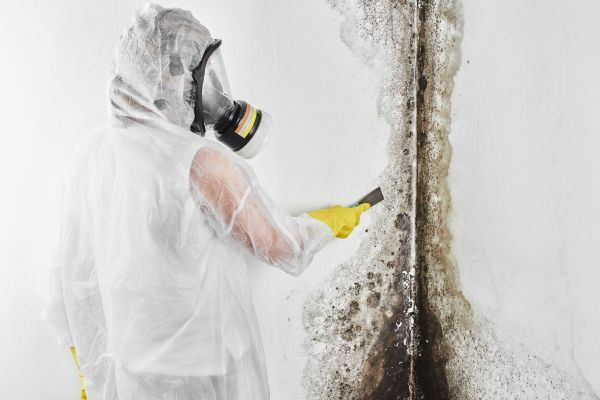
Containment comes next. Professionals set up physical barriers using plastic sheeting to isolate the contaminated area from the rest of your home. They use negative air pressure machines with HEPA filters to create a vacuum effect—air flows into the contained area but doesn’t flow out, preventing spores from spreading. This is the step that separates professional work from DIY disasters.
Mold Clean Up: The Removal and Treatment Phase
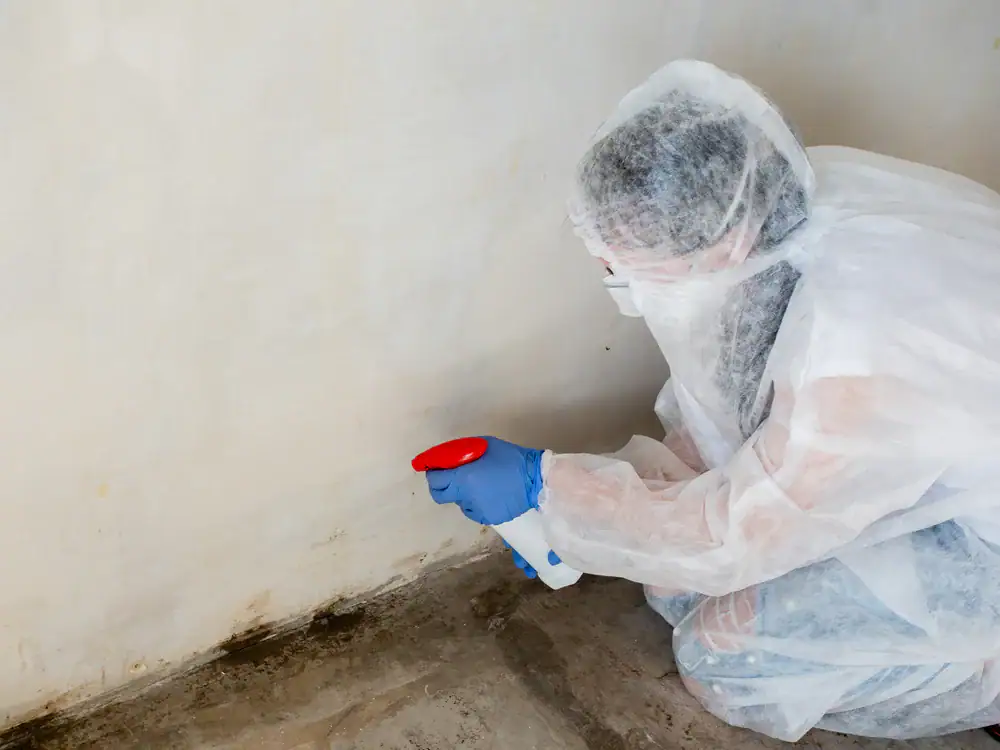
Once containment is established, the actual mold clean up begins. The team removes mold-infested porous materials—drywall, insulation, carpet padding, ceiling tiles—that can’t be adequately cleaned. These materials get bagged in the contained area and disposed of according to local regulations. It sounds drastic, but trying to clean heavily contaminated porous materials just doesn’t work. The mold is too embedded.
For structural elements that can’t be removed—wood framing, concrete, floor joists—professionals use HEPA vacuums to remove surface mold, then apply antifungal and antimicrobial treatments to kill remaining spores and prevent regrowth. They clean all surfaces in the affected area, not just the obviously moldy ones, because spores settle on everything.
Air scrubbers with HEPA filters run continuously during this phase, capturing airborne spores. These aren’t the same as the HEPA vacuum you might have at home. Professional air scrubbers move massive volumes of air and can capture particles down to 0.3 microns—small enough to catch individual mold spores.
The moisture source gets fixed during or immediately after removal. If mold grew because of a leaky pipe, that pipe gets repaired. If it’s a ventilation problem in your attic, that gets addressed. If basement humidity is the culprit, dehumidification or waterproofing becomes part of the plan. This step is non-negotiable. Cleaning mold without fixing the moisture source is throwing money away—the mold will be back within weeks.
After removal and treatment, the team cleans the entire work area again, removes containment barriers carefully to avoid releasing any trapped spores, and may conduct post-remediation testing to verify that spore levels have returned to normal. This final testing typically costs $300 to $800 but provides peace of mind that the job was done right.
The timeline varies. Most mold remediation projects take 3 to 7 days, depending on the size of the affected area and the extent of reconstruction needed. Large projects or those requiring significant rebuilding can take longer. Small jobs—under 10 square feet with no reconstruction—might be done in a day or two.
Mold Mitigation: Fixing the Source and Preventing Spread
Mold mitigation is the broader term that includes both removing existing mold and preventing its spread during the process. It’s about risk reduction—making sure a bad situation doesn’t get worse.
In Milwaukee County, mold mitigation often involves addressing climate-specific problems. Ice dams are a huge culprit in winter. Heat escaping through a poorly sealed attic melts snow on your roof, which refreezes at the colder eaves and forces water under shingles and into wall cavities. Fixing this requires both immediate water damage repair and long-term solutions like attic air sealing and proper insulation.
Spring thaw creates another wave of mold problems. Snowmelt saturates the soil around foundations, and hydrostatic pressure forces water through basement walls and floor joints. This is the leading cause of basement mold in Milwaukee. Mitigation here might include exterior waterproofing, interior drainage systems, sump pump installation or upgrade, and foundation crack repair.
Homes near Lake Michigan face elevated ambient humidity year-round, which feeds mold in attics and wall cavities even without a visible water event. Mitigation in these homes focuses on humidity control—dehumidifiers, improved ventilation, bathroom and kitchen exhaust fans that actually vent outside (not into the attic), and ensuring your HVAC system is properly sized and maintained.
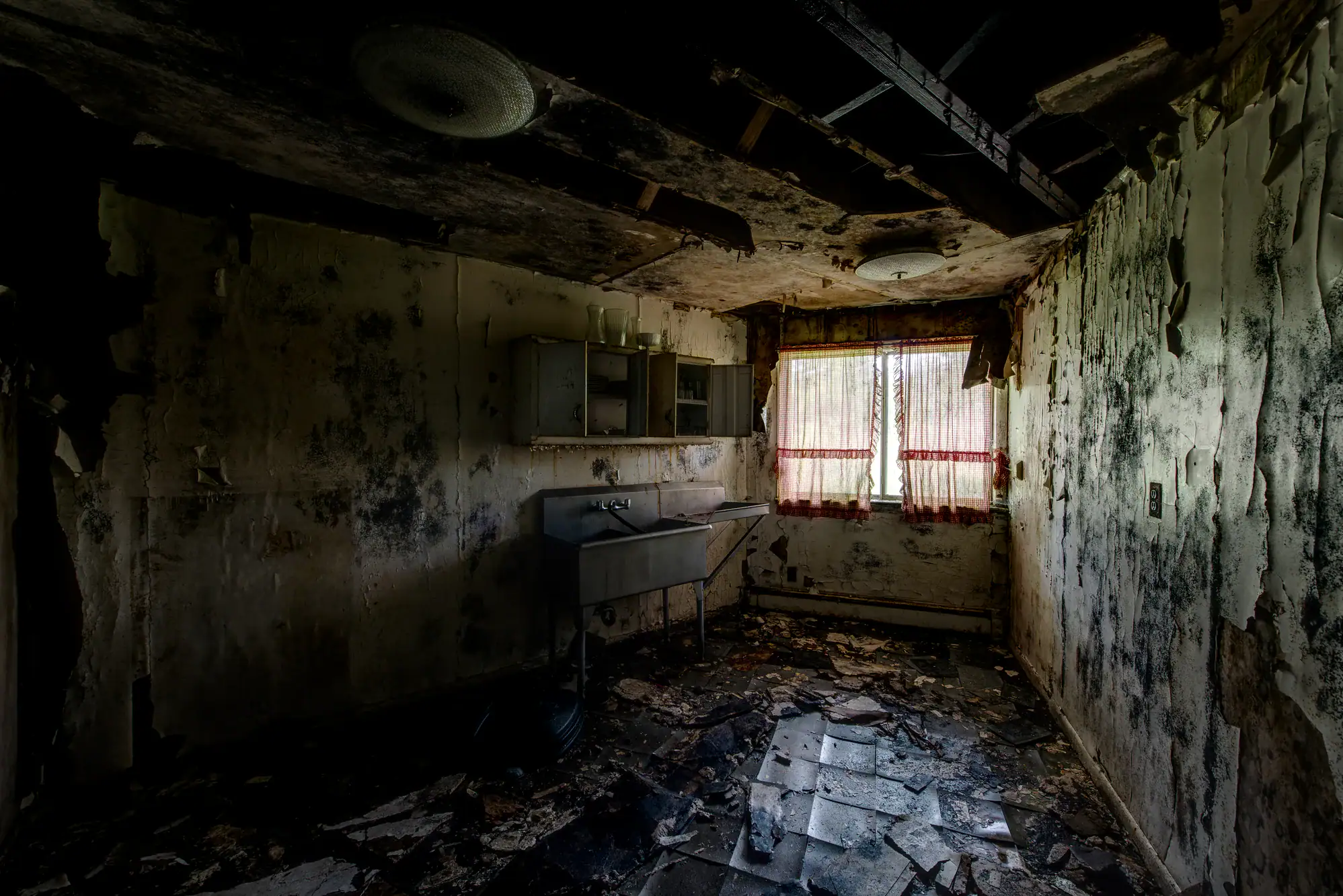
Finished basements over older foundations present a specific challenge. When a foundation crack allows moisture in, the finished walls and flooring trap that moisture. Mold develops behind the drywall, invisible and undetected for years, affecting air quality throughout the entire home. Proper mitigation requires opening walls to find and treat the mold, fixing the foundation issue, and potentially redesigning the space to allow better moisture management.
Mid-century modern homes in Milwaukee have known attic ventilation design problems—warm, humid indoor air enters the attic but has no adequate path out, so it condenses on roof sheathing and framing. Mold mitigation in these homes often requires both remediation of existing growth and ventilation system redesign to prevent recurrence.
The key to effective mold mitigation is understanding that you’re not just treating symptoms. You’re solving the underlying problem. A good remediation company will spend as much time on moisture source identification and correction as they do on mold removal. If they’re not talking about fixing the cause, they’re not doing the job right.
Mold Removal Cost: What to Expect in Milwaukee County
Let’s talk about what mold removal cost actually looks like in 2026, because this is where a lot of homeowners feel vulnerable to being overcharged.
For small jobs under 10 square feet, expect to pay $500 to $1,500. Single-room remediation—a bathroom, a bedroom, a section of basement—typically runs $1,500 to $4,500. Larger projects involving attics or full basements range from $1,500 to $9,000. Whole-house remediation with extensive reconstruction can reach $10,000 to $30,000 or more.
Most professionals price mold remediation per square foot—$10 to $25 for standard work, $15 to $30 when wall cavity access is required. Black mold remediation costs 25 to 50% more due to enhanced safety requirements. HVAC system contamination is priced separately, typically $3,000 to $10,000, because spores distributed through ductwork affect every room.
Several factors drive the final cost. Location matters—mold behind finished drywall costs more than mold on an exposed concrete wall because the wall has to come down. Accessibility matters—crawl space mold remediation is more expensive per square foot than open basement remediation. Severity matters—if mold has damaged structural materials that need replacement, you’re paying for both remediation and reconstruction.
Here’s what should make you pause: if a company gives you a quote without doing a thorough inspection, they’re guessing. If they’re pushing you to make a decision immediately without giving you time to get other estimates, that’s a red flag. If they can’t clearly explain what they’re doing and why, walk away.
Honest mold remediation services start with honest assessments. You should get a detailed scope of work, a clear timeline, and an itemized cost breakdown before any work begins. You should understand what’s included and what’s not—does the quote cover reconstruction, or just remediation? Are they fixing the moisture source, or just cleaning the mold?
Insurance coverage is complicated. Standard homeowner policies cover mold only when it results from a “sudden and accidental” covered event—a burst pipe, appliance overflow, storm damage. Gradual leaks, condensation, humidity, or deferred maintenance are never covered. Even when the trigger is covered, most policies cap mold coverage at $1,000 to $10,000. Proper documentation from the start is critical for claim approval.
At Flood Guys Restoration, our approach is built on transparency. You get a free inspection that tells you the truth about whether you actually need professional remediation or can handle it yourself. You get clear pricing before work begins. You get a dedicated project manager who keeps you informed throughout the process. And you get honest guidance about insurance coverage, moisture source correction, and prevention strategies—because fixing it right the first time is better than fixing it twice.
If you’re dealing with mold in Milwaukee County, you don’t have to navigate this alone. Reach out to us for a straightforward assessment and the kind of service that treats your home the way we’d treat our own.