Summary:
After a fire, most people are standing in their home trying to figure out where to begin. The smoke smell is everywhere. There is water on the floor from the fire hoses. The ceiling looks wrong. And someone just told you to call your insurance company, but you are not sure what to tell them yet.
If you are in Greendale, WI or anywhere else in Milwaukee County and trying to make sense of what comes next, this is for you. We are going to walk through what fire damage does to your home’s structure (the drywall, the framing, the roof) and what a real repair process looks like from start to finish.
What Fire Does To Drywall, Framing, And Roofing
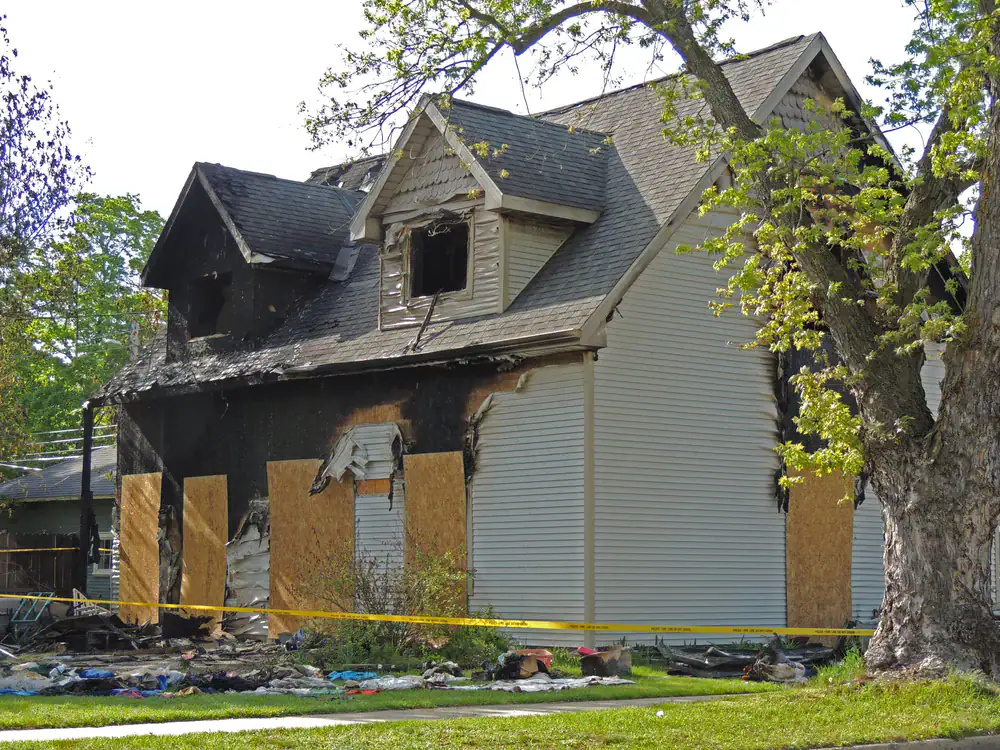
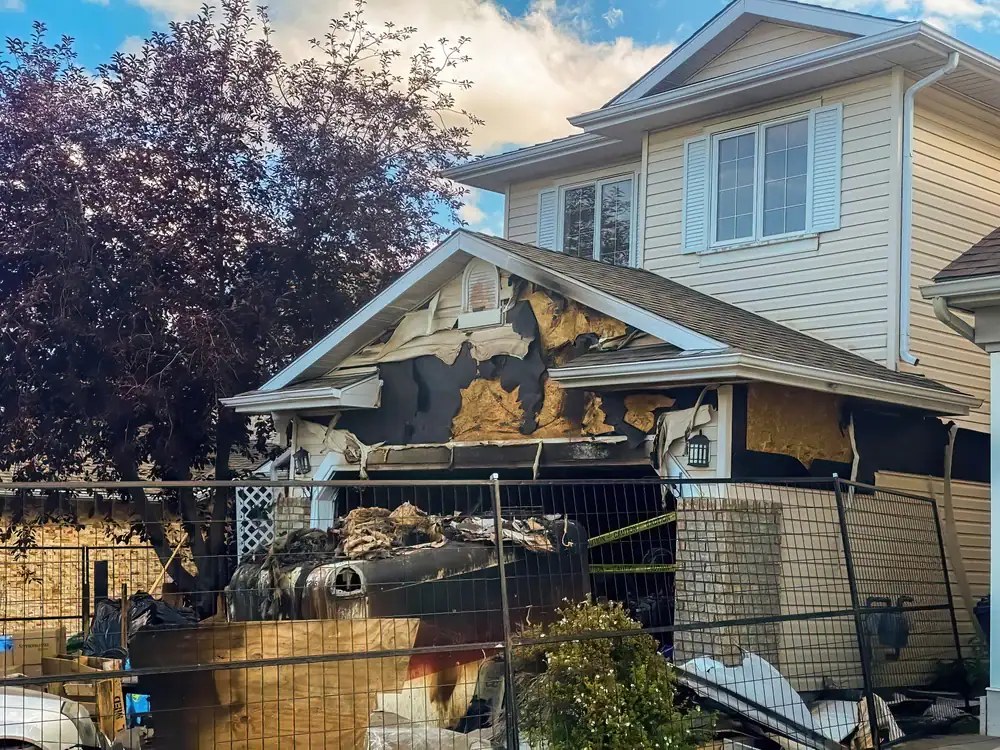
The visible char is rarely the whole picture. Fire damage to a home’s structure happens in layers, and each layer, including drywall, framing, and roofing, behaves differently under heat, smoke, and the water that eventually puts the fire out.
Understanding what is damaged and why serves as the first step toward making smart decisions about who you hire and what you authorize them to do. The scope of structural fire damage is broader than it looks on day one, and the repair process is more specific than most restoration companies explain upfront.
Why Fire-Damaged Drywall Usually Needs Full Replacement, Not Just Repair
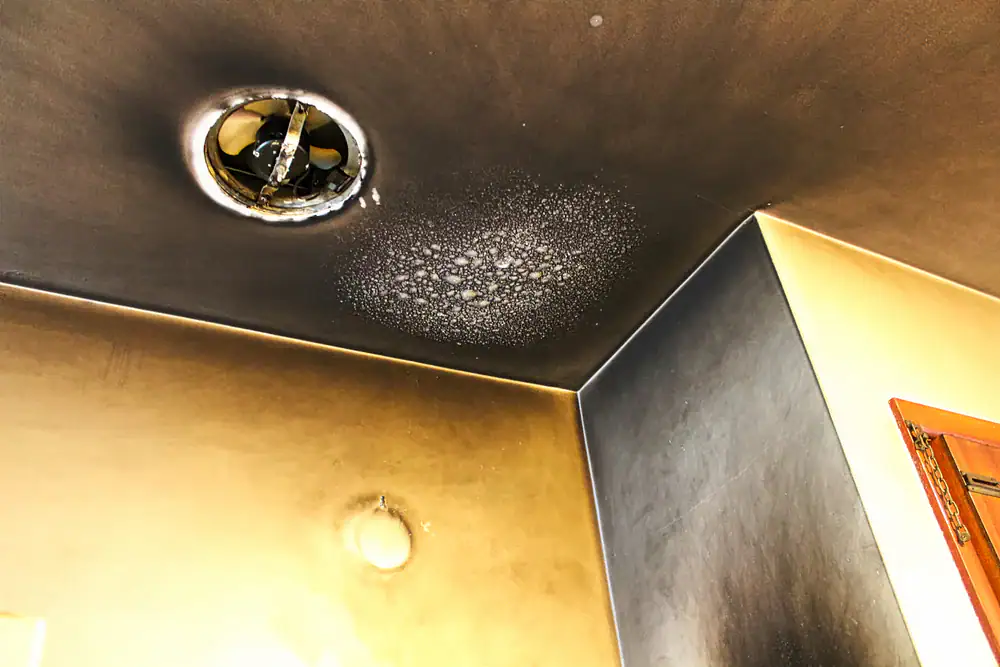
Drywall looks like it should be easy to patch, but after a fire it rarely is. The material is porous, which means it absorbs smoke, soot, and moisture deeply rather than just on the surface. Even drywall that was not directly exposed to flames can carry smoke odor and chemical residue that no amount of cleaning will fully eliminate. When that happens, the only real fix is removal and replacement.
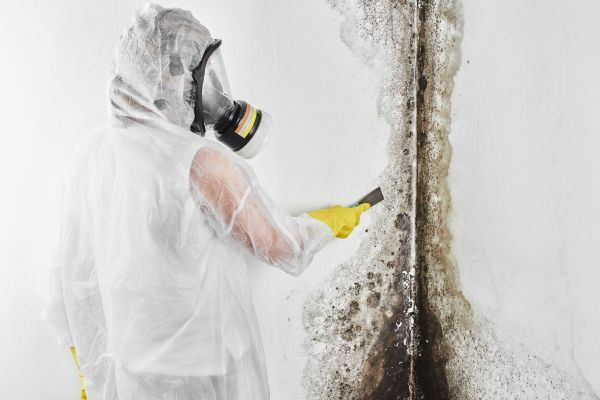
There is another layer to this that most homeowners do not anticipate. The firefighting water that soaked into your walls has to go somewhere, and a lot of it ends up trapped inside the drywall and the insulation behind it. If that moisture is not extracted and dried properly before new drywall goes up, you are sealing a mold problem inside your walls. Mold can begin growing within 24 hours of water intrusion, which means the clock starts the moment the hoses stop.
This is one of the reasons fire damage repair and water damage repair cannot be treated as separate projects. They are happening in the same walls at the same time, and they have to be addressed together. When we assess fire damage in a Milwaukee County home, we look at what burned while also checking moisture levels inside wall cavities, behind baseboards, and in the subfloor, because that is where secondary damage hides.
Many homes in Greendale, WI and throughout Milwaukee County were built between the 1930s and 1970s, when insulation materials and wall assemblies differed from modern standards. Older insulation holds moisture longer, dries slower, and in some cases contains materials that require special handling during demolition. Knowing what you are working with before the drywall comes down is part of doing this right.
How Heat Damages Roof Framing Even When The Fire Stays Below
One of the most common misconceptions after a house fire is that if the flames did not visibly reach the roof, the roof is fine. Heat rises, and it concentrates in attic spaces. A fire contained to a first-floor kitchen or living area can still push enough heat into the attic to compromise roof sheathing, weaken truss connections, and degrade insulation, all without a single visible scorch mark from the outside.
This is why a professional structural assessment of the roofing system is mandatory after any significant interior fire. It is not about being thorough for the sake of it; it is about catching damage that will become a much bigger problem if missed. A weakened truss joint or heat-damaged rafter does not fail immediately. It fails six months later under a Wisconsin snowload, and by then the connection to the original fire is harder to document for your insurance claim.
The repair scope for fire-damaged roofing varies significantly depending on what the heat reached. Sheathing replacement, truss reinforcement, and surface material repair are distinct scopes with different cost profiles. According to industry data, fire-damaged roof repair ranges from $5,000 to $30,000 depending on the extent of structural involvement. Asphalt shingle systems run roughly $7 to $10 per square foot, while metal or tile roofing can run $15 to $25 per square foot. Those ranges reflect the difference between surface repairs and structural repairs, and it is a distinction worth understanding before you get your first estimate.
For older Greendale, WI homes with original roofing systems, there is an additional consideration: current Wisconsin building codes may require upgrades beyond simple like-for-like replacement when structural repairs are triggered. That is not a contractor trying to upsell you, but rather a code compliance reality that a knowledgeable local contractor will explain upfront instead of surprising you mid-project.
How To Choose Fire Damage Repair Contractors In Milwaukee County
The restoration industry has a reputation problem, and it is not entirely undeserved. After a disaster, homeowners are stressed, time-pressured, and often unfamiliar with what repairs should cost or involve. That combination creates opportunity for contractors who inflate scopes, pad estimates, or disappear once the initial payment clears.
Choosing the right fire damage repair contractor in Milwaukee County comes down to specific criteria, and who called you first should not be the deciding factor, even though speed matters.
What Should A Fire Damage Contractor Do And What Questions Should You Ask?
A legitimate fire damage repair contractor handles more than smoke cleanup. We assess structural integrity, extract firefighting water, dry the building properly before closing any walls, document everything for your insurance claim, and complete the physical repairs (drywall, framing, roofing) to a finished standard. If a contractor’s scope stops at cleaning and deodorizing, you will need a separate general contractor to rebuild the structure, which means coordinating two timelines, two contracts, and two sets of expectations.
Before you hire anyone, ask them directly: Do you handle structural repairs, or just remediation? How do you document moisture levels during drying, and how will I know when it is safe to close the walls? What is your process for working with my insurance adjuster? How long will the full project take?
The answers matter less than how the contractor responds to the questions. A contractor who gets defensive, vague, or rushes past the details is telling you something important. A contractor who walks you through the process clearly, acknowledging that your home in Greendale, WI has specific characteristics worth knowing about, demonstrates the kind of competence that protects you later.
One thing worth understanding about the Milwaukee County market is that you will encounter both national franchise brands and locally rooted companies competing for the same jobs. National brands bring name recognition and standardized processes. Local companies bring genuine familiarity with the area’s housing stock, soil conditions, and the specific way Milwaukee County winters create fire risk, such as space heaters running in older homes with inadequate insulation or fireplaces in mid-century construction that has not been inspected in years. That local knowledge is operational context that shapes how an assessment gets done.
We assign a dedicated project manager to every job. That person oversees the full cycle, from the initial damage assessment through the final walkthrough, providing regular updates so you are never left wondering what is happening at your house. We also handle both fire damage repair and water removal under one roof, which means the firefighting water in your walls and the structural repairs to your drywall and framing are addressed simultaneously rather than sequentially.
Common Questions Greendale, WI Homeowners Ask About Fire Damage Repair
Does homeowners insurance cover fire damage to drywall, framing, and roofing?
Generally yes, as fire damage to your home’s structure is covered under the dwelling portion of a standard homeowners policy. But the claims process for structural repairs requires proper documentation: photos, moisture readings, and scope-of-work descriptions that align with what your adjuster is looking at. We document as we go rather than after the fact, which gives you a cleaner path through the claims process. If your Greendale, WI home is older, there is also the code upgrade question: if repairs trigger current building code requirements, your policy may or may not cover the difference between like-for-like replacement and code-compliant upgrades. That is a conversation worth having with your adjuster early.
How long does fire damage repair take?
Structural drying typically takes three to five days. The full repair cycle (drywall replacement, framing repairs, roofing work, finishing) generally runs one to two weeks for most residential properties, though larger or more complex projects take longer. The honest answer is that the timeline depends heavily on what the moisture assessment reveals once work begins. A contractor who gives you a firm two-week guarantee before opening a single wall is either very confident or not being straight with you.
Do I need a separate contractor for the water damage from firefighting?
Not if you hire a contractor who handles both. The water introduced by fire suppression, from hoses, sprinklers, or both, creates a secondary damage timeline that runs parallel to the fire damage repair. Mold risk, structural drying, and insulation replacement are water damage scopes that have to be managed alongside the fire repairs, not after them. Hiring separate contractors for each creates coordination gaps that cost you time and money. In Milwaukee County, where older housing stock absorbs and holds moisture differently than new construction, getting both scopes under one contractor’s oversight matters even more.
What is the first thing I should do after a house fire in Greendale, WI?
Call a restoration contractor at the same time you call your insurance company, not after. The damage clock runs from the moment the fire is out, and waiting for the insurance process to move forward before starting extraction and drying allows secondary damage to compound. A good contractor will work alongside your adjuster, not in conflict with them, and will document everything needed to support your claim.
Fire Damage Repair In Greendale, WI And Milwaukee County: What To Do Next
Fire damage to your home’s drywall, framing, and roofing is not a single repair, but rather a sequence of connected scopes that require management in the correct order by experienced professionals. The firefighting water in your walls, the heat damage in your attic, and the smoke absorbed into surfaces you cannot see all matter and follow their own timelines.
For homeowners in Greendale, WI and across Milwaukee County, the most important decision you make in the first 24 hours is who you trust to assess the damage honestly and guide you through the recovery. Seek out the contractor who explains what is happening and what needs to happen next rather than the one who shows up fastest with the most aggressive pitch.
If you are dealing with fire damage right now and want a straight answer about what you are facing, reach out to Flood Guys Restoration. We cover all of Milwaukee County and are built for exactly this kind of situation.