Summary:
You’ve spotted mold. Maybe it’s a small patch in the bathroom, or maybe it’s spread across your basement wall after that flooding last month. Either way, you need to know what happens next.
The mold removal process isn’t as simple as scrubbing and hoping for the best. It’s a systematic approach that targets both the mold you can see and the conditions that let it grow. Understanding the full process helps you make better decisions about your home, your budget, and your family’s health.
Here’s what actually happens when we handle mold removal from start to finish.
Complete Mold Removal Process: From Start to Finish
The mold removal process follows a specific sequence designed to eliminate existing growth while preventing it from returning. This isn’t about quick fixes or covering up the problem.
Professional mold removal addresses the source of moisture first. Without fixing what caused the mold, you’re just delaying the next outbreak. That leak, that condensation issue, that poor ventilation—those get identified and corrected before any cleaning begins.
From there, the process moves through containment, removal, cleaning, and verification. Each step builds on the last. Skip one, and you risk spreading spores throughout your home or leaving conditions that invite mold back within weeks.
Initial Assessment and Moisture Source Identification
The first step determines how much mold you’re dealing with and where it’s getting the moisture it needs to survive. A thorough inspection looks beyond obvious growth to find hidden problem areas behind walls, under flooring, or in crawl spaces.
We use moisture meters and thermal imaging to detect water you can’t see. That’s important because visible mold often signals a bigger issue lurking where you haven’t looked yet. Milwaukee’s climate creates perfect conditions for basement moisture and condensation problems, especially after heavy rains or flooding events.
The assessment also identifies the type of surfaces affected. Mold on tile is a different problem than mold that’s penetrated drywall or insulation. Some materials can be cleaned and saved. Others need to be removed entirely because mold has worked its way too deep into porous materials to clean effectively.
This phase also establishes a realistic timeline. A small bathroom mold issue might take a day or two. Basement mold that’s spread across multiple walls could take a week or more. The size of the affected area, the type of mold, and how far it’s spread all factor into how long the full process takes.
You’ll also get a clear plan at this stage. What stays, what goes, what the containment setup looks like, and what you need to do to prepare. Good communication here prevents surprises later when you see equipment being set up or materials being removed.
Containment Setup and HVAC Protection
Once the assessment is complete, the next priority is making sure mold doesn’t spread to clean areas of your home during the removal process. Containment creates a barrier between the work zone and the rest of your house.
This typically involves plastic sheeting and zipper doors that seal off the affected area. The goal is to prevent mold spores from traveling through your home when materials get disturbed during removal. Even a small amount of mold releases thousands of microscopic spores when you start cleaning or tearing out materials.
Your HVAC system gets shut off during this phase. Running your heating or cooling while mold work is happening is one of the fastest ways to spread spores throughout your entire house through the ductwork. Fans get turned off too. Any air movement can carry spores from the contained area into rooms that were previously clean.
Negative air pressure is often created inside the containment area. This means air flows into the work zone but doesn’t flow back out into your home. Special equipment vents contaminated air directly outside, creating a vacuum effect that keeps spores from escaping the contained space.
The containment setup might look dramatic—plastic walls, sealed doorways, ventilation hoses running to windows. But this step is what prevents a localized mold problem from becoming a whole-house contamination issue. It’s also what makes it possible for you to stay in other parts of your home during the work, depending on the severity of the situation.
For smaller jobs in isolated areas like a bathroom or closet, containment might be straightforward. For larger issues involving multiple rooms or your basement, the setup becomes more extensive. Either way, proper containment is non-negotiable for preventing cross-contamination.
Professional Mold Clean Up Techniques and Methods
Mold clean up involves more than spraying cleaner and wiping surfaces. The techniques we use depend entirely on what the mold is growing on and how deep it’s penetrated.
Hard, non-porous surfaces like tile, glass, or metal can usually be cleaned and saved. Porous materials like drywall, carpet, insulation, or fabric that have been heavily contaminated typically need to be removed and replaced. You can’t clean mold out of something that’s absorbed it deep into its structure.
The cleaning phase uses specialized equipment and antimicrobial treatments designed specifically for mold. Regular household cleaners might remove surface mold, but they don’t address spores or prevent regrowth the way professional-grade products do.
Air Filtration and Spore Removal
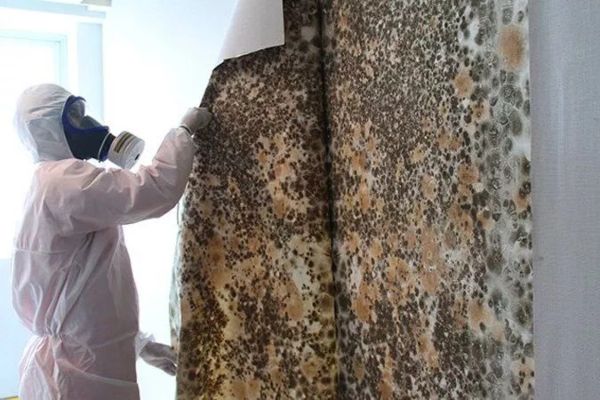
While physical cleaning handles visible mold, air filtration tackles the spores you can’t see floating in the air. This is one of the most critical parts of the entire process because airborne spores are what cause mold to spread and what trigger health reactions.
HEPA filtration equipment captures microscopic mold spores from the air. These aren’t regular air purifiers—they’re industrial-grade machines designed specifically for remediation work. Air scrubbers pull contaminated air through HEPA filters that trap particles as small as 0.3 microns.
The equipment typically runs for 48 to 72 hours or longer, continuously exchanging contaminated air with clean air. This gives the machines time to cycle through the air in the affected space multiple times, catching spores that get released during the physical removal and cleaning work.
HEPA vacuums are also used on every surface in the work area. This isn’t regular vacuuming—it’s methodical coverage of every square inch, including walls, ceilings, pipes, and any structural elements. The goal is to remove settled spores before they have a chance to become new growth.
Dehumidifiers run alongside the air filtration equipment. Mold needs moisture to grow, so removing humidity from the air is essential for preventing immediate regrowth. The space needs to be brought down to proper moisture levels before the work is considered complete.
This phase is why you might see multiple pieces of equipment running simultaneously in the affected area. Each one serves a specific purpose in the overall goal of removing both visible mold and airborne spores while creating an environment where new growth can’t take hold.
Material-Specific Mold Cleaning Approaches
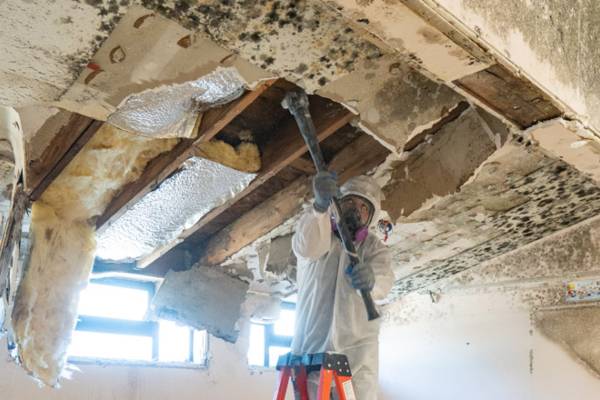
Not everything can be saved when mold has taken hold. Porous materials that have absorbed moisture and mold growth need to be removed completely. This includes drywall, insulation, carpeting, ceiling tiles, and in severe cases, structural wood that’s been compromised.
The removal process is done carefully to minimize the release of additional spores. Materials are misted with water before removal to keep dust down. Everything that’s removed gets sealed in heavy plastic bags before being carried through your home. This prevents contamination of clean areas during the removal process.
For materials that can be saved, treatment involves more than surface cleaning. Wood framing might be sanded and treated with fungicide. Hard surfaces get scrubbed with antimicrobial solutions. The treatment is thorough because any remaining spores or residue can restart the growth cycle once moisture returns.
Structural elements that can’t be easily replaced get special attention. Exposed wood beams, floor joists, or wall studs are treated, cleaned, and dried completely. These elements are inspected to ensure the mold hasn’t caused structural damage that would require additional repairs.
Belongings in the affected area—furniture, clothing, personal items—are evaluated individually. Some can be cleaned and saved. Others, particularly fabric items that have been heavily exposed, might need to be discarded. This is one of the harder conversations during the process, but it’s necessary for ensuring your home is truly safe after the work is done.
The goal during this phase is to remove anything that can’t be completely cleaned and treat everything that remains. By the time material removal is complete, you’re left with a clean, dry space ready for restoration work.
Mold Mitigation: Long-Term Prevention and Final Steps
Mold mitigation focuses on the long-term solution. It’s the difference between removing mold and actually solving the mold problem. This is where the moisture source gets addressed permanently, verification testing confirms the work was done right, and your home gets restored to normal.
The specific fix depends on what caused the problem in the first place. Leaky pipes get repaired or replaced. Poor ventilation gets improved. Basement seepage issues get addressed through waterproofing solutions. Milwaukee homeowners often deal with moisture challenges from heavy rain and snowmelt, which means drainage and foundation work sometimes become part of the solution.
Post-remediation verification confirms the work was successful. Third-party inspectors perform visual checks and air quality testing to ensure mold levels have returned to safe ranges. This documentation proves the job was done correctly and gives you peace of mind that your home is safe again.
If you’re dealing with mold in Milwaukee County, WI, understanding the complete process helps you evaluate whether a company is doing the work properly. We walk homeowners through each step with clear communication, explaining what’s happening and why, so you’re never left wondering what comes next.