Summary:
You’ve got water where it shouldn’t be. Maybe it’s a basement that flooded during Milwaukee’s spring thaw, a ceiling stain that appeared after frozen pipes burst, or water seeping through your foundation after heavy rain. Whatever brought you here, you’re probably wondering what happens next—and whether the person who shows up to inspect your home will give you straight answers or try to sell you work you don’t need. A professional water damage inspection isn’t someone walking through your house eyeballing wet spots. It’s a structured assessment using specialized equipment to find moisture you can’t see, identify the water source, evaluate mold risk, and document everything properly for your insurance claim. Here’s what actually happens when we show up to inspect your Milwaukee County property.
Professional Water Damage Inspection: What to Expect
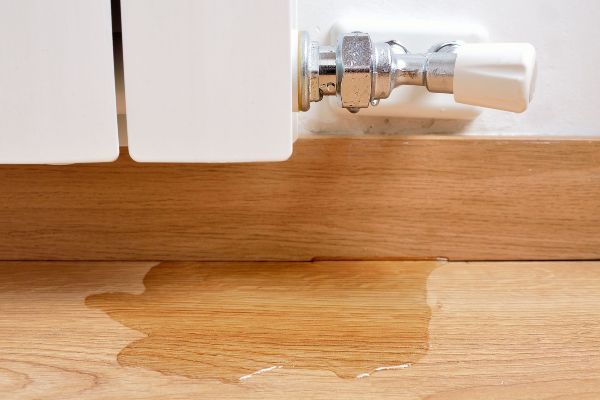
The inspection starts the moment we walk through your door. Before any equipment comes out, we’ll ask what happened—when you first noticed the water, where it’s coming from if you know, and whether the source has been stopped. If you’re dealing with a burst pipe from Milwaukee’s subzero winter temperatures or a sump pump that failed during spring runoff, we need that context.
This conversation isn’t small talk. It shapes everything that follows. Water that’s still actively flowing requires immediate containment before any assessment can happen. Once the situation is stable, the inspection moves into a systematic evaluation of every affected area—starting with what’s visible, then moving to what’s hidden.
The goal is simple: find every place water has traveled, measure how much moisture is present, and document it all so nothing gets missed.
Moisture Detection Equipment and Advanced Technology
Water doesn’t stay where it lands. It travels through porous materials like drywall, insulation, and wood framing. It seeps under flooring and into wall cavities. And it can sit there for days, quietly creating the perfect environment for mold growth and structural damage—long after the surface looks dry to the touch.
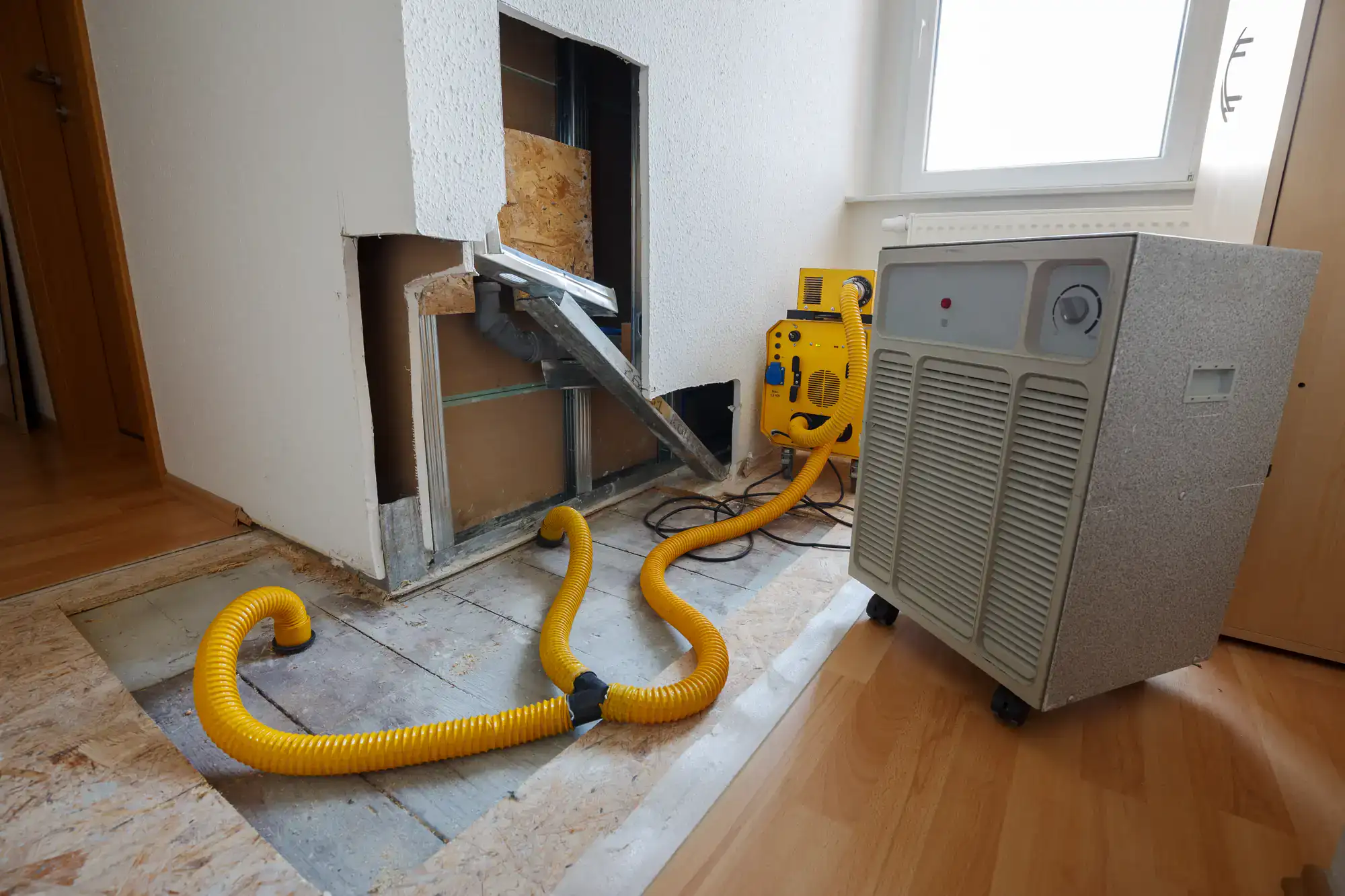
That’s why professional water damage inspections rely on detection equipment you won’t find at a hardware store. Moisture meters are the foundation of the process. Pin-type meters use probes that penetrate materials to measure moisture content deep inside wood, drywall, or subflooring. Pinless meters scan surfaces without causing damage, useful for checking large areas quickly. Both types give us precise moisture readings that map exactly where water has traveled and how saturated materials have become.
Thermal imaging cameras take detection further. These infrared devices reveal temperature differences across walls, ceilings, and floors. Cold spots often indicate hidden moisture, even when everything feels dry. Thermal imaging is especially useful for finding water that’s migrated behind tile, under hardwood, or into ceiling cavities where visual inspection can’t reach. In Milwaukee homes with older plumbing or foundation issues, this technology catches problems that would otherwise go unnoticed until mold appears.
Hygrometers measure relative humidity in different rooms. Elevated readings point to excess moisture in the air that needs addressing during drying. We also use borescopes in some cases—small cameras on flexible cables that peek inside wall cavities, beneath cabinets, or behind fixtures to check for damage completely out of sight.
This equipment doesn’t just confirm you have a problem. It shows exactly how far the problem extends, which directly affects the scope of work needed, the timeline for drying, and the cost of restoration. More importantly, it catches issues that would cost thousands more to fix if left undiscovered.
Water Source Identification and Contamination Categories
Finding moisture is only part of a comprehensive water damage assessment. We also identify where the water came from and what type of contamination you’re dealing with. This isn’t academic—it determines what safety precautions are needed, what materials can be saved, and how the cleanup must be handled.
Water damage falls into three contamination categories. Category 1 water comes from clean sources like supply lines, broken faucets, or toilet tanks before any waste contact. It’s the least hazardous and easiest to manage. Category 2 water—sometimes called gray water—contains some contamination. This includes water from washing machines, dishwashers, or sump pump failures. It can cause illness if ingested and requires more careful handling during extraction and drying.
Category 3 water is grossly contaminated. Sewage backups, flooding from rivers or storm water, or any water that’s been sitting long enough to develop bacteria. It poses serious health risks and requires full protective equipment, antimicrobial treatments, and often complete removal of affected porous materials rather than drying in place.
We’ll also classify the damage into one of four classes based on how much moisture has been absorbed and how difficult it will be to dry. Class 1 affects less than 5% of a room’s surface area with minimal absorption. Class 2 involves 5-40% of the area with significant wetting of walls and flooring. Class 3 means more than 40% of the space is affected, often including ceilings and insulation. Class 4 is the most severe—deeply bound water in materials like hardwood, plaster, or concrete that don’t absorb easily but take days to dry once they do.
These classifications aren’t technical jargon for the sake of it. They determine what equipment gets deployed, how long drying takes, what safety protocols apply, and what your insurance company will approve for coverage. A detailed inspection documents all of this so there’s no confusion later about what work was necessary or why certain materials had to be replaced.
Comprehensive Water Damage Assessment Process
Once the inspection wraps up, you’ll receive a detailed written report. Not a verbal summary. Not a quick estimate scribbled on the back of a business card. A formal document that outlines everything we found, complete with photos, moisture readings, and a clear explanation of what happens next.
The report serves multiple purposes. It gives you a roadmap for restoration. It provides your insurance adjuster with evidence they need to process your claim without delays or disputes. And it protects you if questions come up later about what was damaged, when it was discovered, or whether the work performed was actually necessary.
A proper report includes specific details: location and extent of affected areas, moisture meter readings for each material tested, thermal imaging findings showing hidden moisture, the water category and damage class, dimensions of affected surfaces, materials involved, and a preliminary scope of work. We share initial findings on-site and send the full written report within 24 to 48 hours.
Structural Evaluation and Hidden Damage Detection
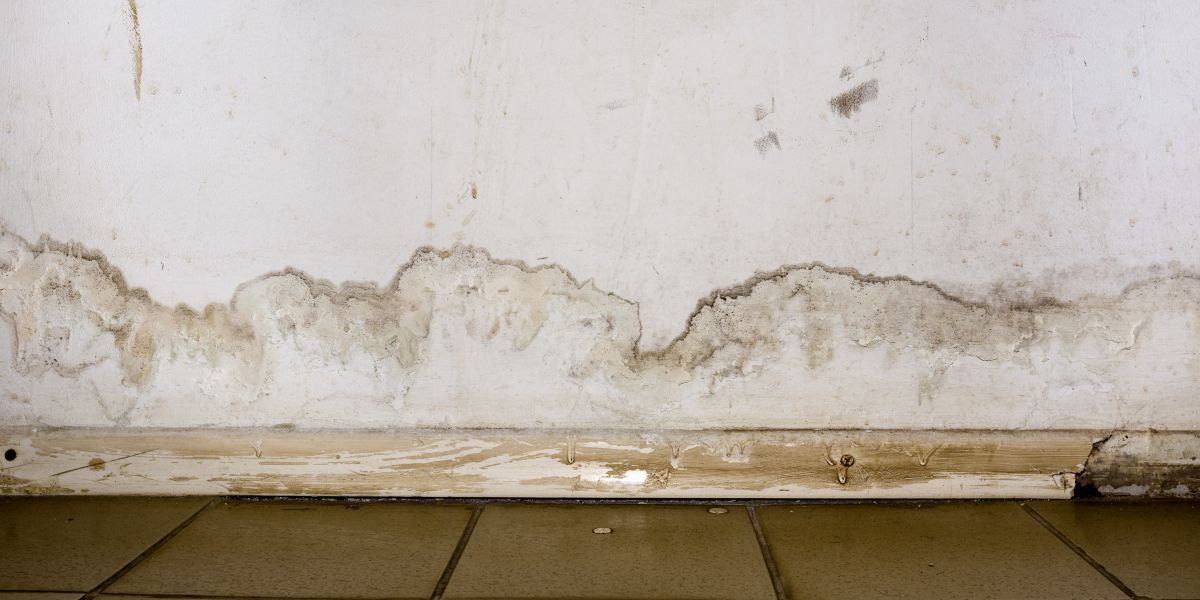
Water doesn’t just damage surfaces you can see. It compromises the materials holding your home together. During a thorough water damage assessment, we evaluate structural integrity to determine whether framing, subflooring, or load-bearing elements have been weakened by moisture exposure.
Wood framing that’s been soaked can lose strength, especially if moisture has been present long enough for rot to begin. Drywall absorbs water like a sponge, and once saturated, it often needs removal rather than drying in place. Insulation—whether fiberglass batts or blown-in cellulose—loses effectiveness when wet and becomes a breeding ground for mold if not addressed quickly. In Milwaukee County homes built in the 1920s through 1950s, aging materials are even more vulnerable to water damage than newer construction.
Hidden damage is one of the biggest concerns. Water travels along the path of least resistance, which means it can show up in one room while the source is somewhere else entirely. We check adjacent spaces, floors above and below visible damage, and areas near plumbing lines or HVAC systems. We’re looking for moisture gradients—patterns that show how far water has migrated and where it’s concentrated.
Thermal imaging cameras and moisture meters make it possible to find these issues before they turn into structural failures. A slow leak dripping inside a wall for weeks can weaken studs, promote mold growth, and damage electrical wiring—all before you notice the first stain on your ceiling. Catching this during the initial inspection prevents thousands in additional repairs and protects your family from health hazards.
This level of detail also matters for your insurance claim. Adjusters need documented evidence of the full scope of damage to approve coverage. If the inspection report only captures what’s visible on the surface, you could end up paying out of pocket for repairs that should have been covered. Professional documentation with moisture readings, photos, and thermal images gives your claim the backing it needs.
Water Intrusion Repair Planning and Mold Risk Assessment
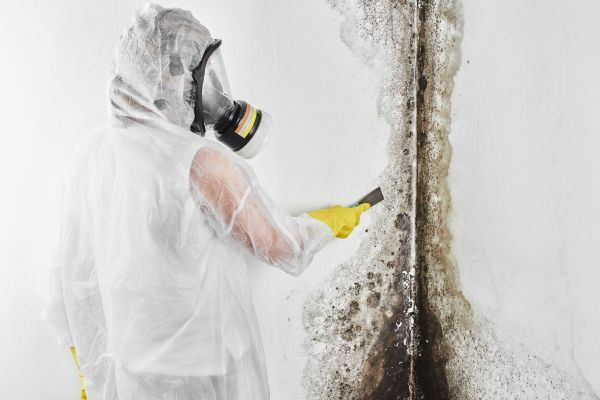
Mold doesn’t wait for you to figure things out. In the right conditions—moisture, warmth, and organic material like drywall or wood—mold can begin growing within 24 to 48 hours. That’s why every professional water damage assessment includes an evaluation of mold risk and a plan for addressing water intrusion at its source.
We check for visible mold growth, but we also look for conditions that make development likely. High humidity levels, poor ventilation, and moisture trapped in porous materials all create environments where mold thrives. If water has been present for more than a couple of days, or if affected areas include basements or crawl spaces with limited airflow, risk increases significantly. Wisconsin’s naturally high humidity during summer months compounds the problem.
The assessment also identifies how water got into your home in the first place. Was it a burst pipe that needs replacing? A foundation crack letting groundwater seep through? A failed seal around windows or doors? Ice dams on your roof from Milwaukee’s harsh winters? Identifying the source isn’t just about cleanup—it’s about preventing the same problem from happening again.
Water intrusion repair planning addresses both immediate damage and long-term prevention. This might involve recommendations for pipe insulation to prevent winter freezing, foundation waterproofing, improved drainage around your property, or repairs to roof flashing. The goal is permanent solutions, not temporary patches that fail six months later.
If the water involved is Category 2 or Category 3—containing bacteria, chemicals, or sewage—the assessment will note what antimicrobial treatments and safety measures need to be in place during restoration. This isn’t about upselling unnecessary services. It’s about addressing real health risks. Mold exposure can trigger allergic reactions, respiratory issues, and asthma flare-ups, especially in children, elderly individuals, or anyone with compromised immune systems.
As qualified water damage specialists with IICRC certification, we follow industry standards for assessment, documentation, and remediation planning. That certification isn’t just a credential—it represents training in moisture detection, psychrometry (the science of drying), equipment operation, and safety procedures that protect both workers and occupants during restoration.
Moving Forward After Your Water Damage Inspection
A professional water damage inspection gives you clarity when you need it most. You’ll know exactly what’s damaged, where hidden moisture is lurking, what category and class of damage you’re dealing with, and what the restoration process will involve. You’ll have documentation to support your insurance claim and a clear understanding of timeline and cost.
From here, restoration can begin—water extraction, drying, dehumidification, antimicrobial treatment, and repairs. But the inspection is what makes all of that possible. Without it, you’re guessing about the extent of damage and hoping nothing was missed. When it comes to protecting your Milwaukee County home and your family’s health, guessing isn’t good enough.
If you’re dealing with water damage, we provide thorough inspections with transparent communication, advanced detection equipment, and honest recommendations. You’ll get the answers you need to move forward with confidence—no pressure, no unnecessary upsells, just clear guidance from a professional team that understands what you’re going through.