
Standing water is a clock, not a mess. From the moment it settles, it is moving into the subfloor, wicking up the inside face of your drywall, and soaking the insulation in the wall cavity where you cannot see it. Getting it out fast is what decides whether this is a drying job or a rebuilding job.
We answer 24/7, we are based in Greendale, and we aim to be at your door in under 60 minutes anywhere in Milwaukee County. The inspection costs you nothing.
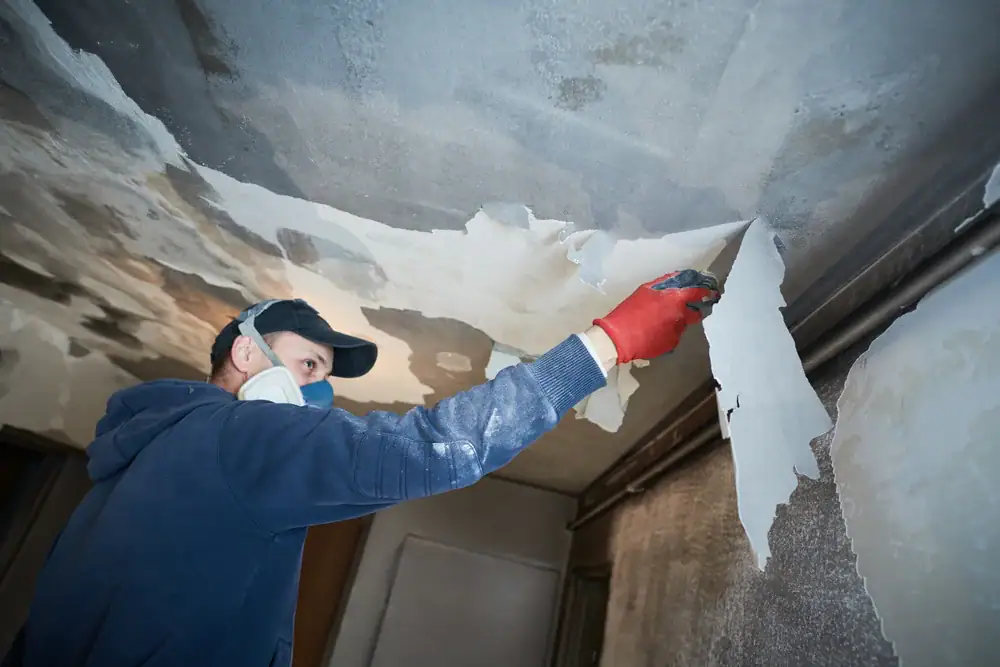
Water emergencies do not keep office hours, so neither do we. When you call, a person answers, and a technician is dispatched rather than a salesperson. That distinction matters more than it sounds: the person who walks your property should be the one who can tell you what it will take to put it right.
The first visit has three jobs. Stop the source if it is still running. Find the true extent of the water, which is almost always larger than the wet patch you can see. Then get extraction started, because every hour that standing water sits, more of it moves from the floor into materials that are far harder and more expensive to dry.
There is a widely used industry rule that mold can begin to establish within 24 to 48 hours of materials staying wet. That is the window the whole emergency phase is built around. It is also why we would rather come out and tell you it is minor than have you wait until the weekend to find out it was not.
We have been doing this across Milwaukee County for over 15 years, and our technicians hold IICRC certification, which is the restoration industry’s training standard rather than a permit anyone can buy.
Where the water came from changes the whole job, not just the cleanup. The restoration industry sorts water into three categories, and the category decides what can be dried and saved and what has to be thrown away.
Category 1 is clean water from a supply line or a tank. Most of what it touches can be dried in place. Category 2 carries contaminants, for example washing machine or dishwasher discharge, and soft materials usually come out. Category 3 is grossly contaminated, which includes sewer backup and any water that came in from outside across the ground. Category 3 is a decontamination job, and porous materials it has touched are not salvageable.
Clean water also does not stay clean. Left sitting against dirty materials, category 1 degrades toward category 2 within a couple of days, which is another reason speed changes the bill. Here are the sources we are called out to most often.
A failed supply line puts clean water out under mains pressure, so the volume gets very large very quickly. Copper splits at the coldest point, which in Wisconsin is usually an unheated basement, a crawl space, or a line running through an exterior wall.
The good news is that it is category 1 water, so if we reach it early most materials can be dried in place rather than replaced. The bad news is pressure: it travels along joists and under flooring far from the split, so the wet patch you find is rarely where the problem started.
When heavy rain or a fast thaw overwhelms the storm system, water backs up rather than draining away. Milwaukee County sits on clay soil that drains slowly, so surface water pushes toward foundations instead of soaking away, and older properties across the county were not built for the rainfall we now get.
Water that has crossed the ground is category 3 by definition, no matter how clean it looks. That means carpet, pad and saturated drywall come out rather than being dried, and the space needs decontaminating as well as drying.
Roof leaks are the ones people discover late, because the water travels along the top of a ceiling and appears in a room nowhere near the actual gap. By the time a stain shows on the ceiling, the insulation above it has usually been holding water for a while.
Wet insulation is the part most people underestimate. Once it compresses it stops insulating, it does not recover when it dries, and it holds moisture against the framing above your ceiling. That is why a small stain often turns into a bigger scope than expected once we open it up.
The hardest part of this for most people is not knowing whether it is serious. You can see water, you cannot see what it has reached, and every company you call has an obvious interest in telling you it is bad.
So the inspection is free and it carries no obligation. A technician comes out, meters the affected area, and tells you what he found in writing, whether or not you hire us. If it turns out to be minor, that is what you will hear. We would rather lose the job honestly than win it by making it sound worse than it is.
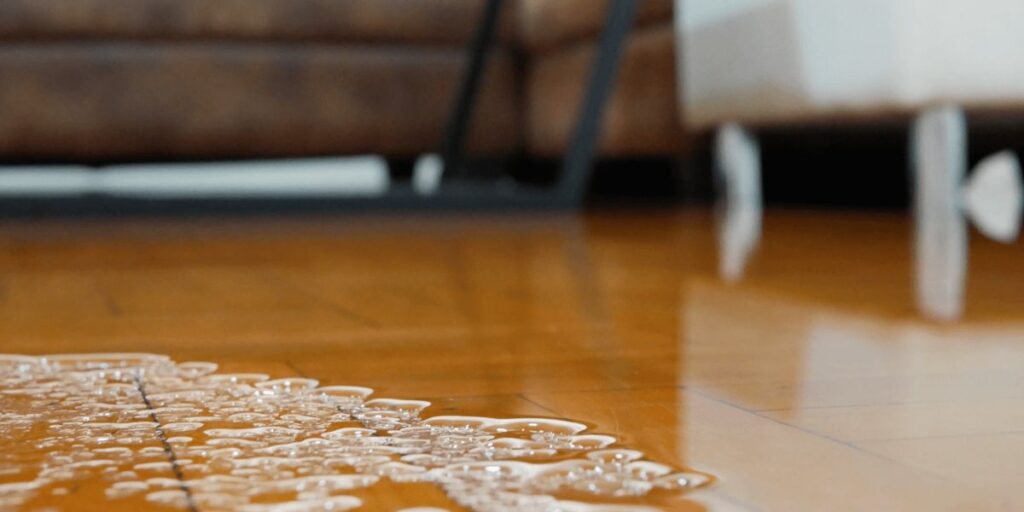
Extraction is not one step, it is four, and the order matters.
1. Stop and assess. The source gets shut off first, then we map how far the water has actually traveled using moisture meters. Thermal imaging helps here, but it reads surface temperature rather than moisture, so a meter confirms anything the camera suggests. What gets recorded at this visit becomes the evidence your insurer works from later.
2. Bulk removal. Submersible pumps take out standing water, then truck mounted or portable extraction units pull what is held in carpet, pad and the top layer of subfloor. Mechanical extraction removes far more water than evaporation ever will, which is why we spend the time on it rather than rushing to set fans.
3. Open up what has to be opened. Water trapped inside a wall cavity or under a floating floor will not dry from the outside. Drilling weep holes at the base of drywall, removing baseboard, or lifting a section of flooring lets the trapped water out. It looks destructive and it is the opposite: it is what saves the wall from being replaced.
4. Dry to a target. Air movers push air across wet surfaces to speed evaporation, and dehumidifiers pull that moisture out of the air so it does not simply resettle. We set them to the size of the space and the wetness of the materials, then take daily readings against a target based on unaffected areas of the same property. The equipment leaves when the numbers say the structure is dry, not when the floor feels dry underfoot.
Every property dries differently, so the honest answer to “how long” only exists after the first set of readings. What we can tell you up front is the shape of it: a small clean water loss caught quickly is often three to five days of equipment, while a large or contaminated loss runs longer and involves removing materials before drying can even start.
You will get a written scope before any work begins, with the photos and readings behind every line on it. If something we find later changes that scope, you hear about it the same day with the reason, rather than discovering it on the final invoice.
Call 414-519-9912 any hour. If you are calling around, ask every company for a response time as a number rather than a promise to be there soon.
Usually yes for the emergency work, but it depends entirely on where the water came from, and this is where people get caught out.
Most homeowners policies cover water damage that is sudden and accidental, which is what a burst supply line or a failed appliance hose is. Emergency mitigation, meaning the extraction and drying that stops the damage spreading, is normally covered and expected. Insurers want you to act fast, because a delayed response costs them more too.
Three common exclusions are worth knowing before you need them. Gradual damage, such as a slow leak that went unnoticed behind a cabinet for months, is usually declined on the grounds of maintenance. Surface flooding and groundwater are not covered by a standard policy at all and need separate flood insurance. Sewer and drain backup is typically excluded unless you specifically bought that endorsement, which is inexpensive and which most people do not realize they lack until they need it.
What actually decides a borderline claim is documentation from the first visit. We record moisture readings, photograph everything before it is moved, and log what was removed and why, in the format adjusters expect. We bill the carrier directly where your policy allows, so you are not fronting the money and chasing it back afterwards. We work with every carrier and we are not on anyone’s preferred vendor list, which keeps the scope pointed at your property rather than at a claims target.
We aim to be with you in under 60 minutes anywhere in Milwaukee County, and the phone is answered 24 hours a day by a person rather than a service that takes a message for the morning. We work out of Greendale, so this is a short run rather than a dispatch from another state.
Response time is the single most useful question you can ask any restoration company, because it is the one thing that changes the size of the job. Water sitting overnight moves from the floor into the subfloor and the wall cavity, and materials that could have been dried at hour two often have to be removed at hour twelve.
Ask for a number rather than a promise. If a company will not give you one, they are not planning around it.
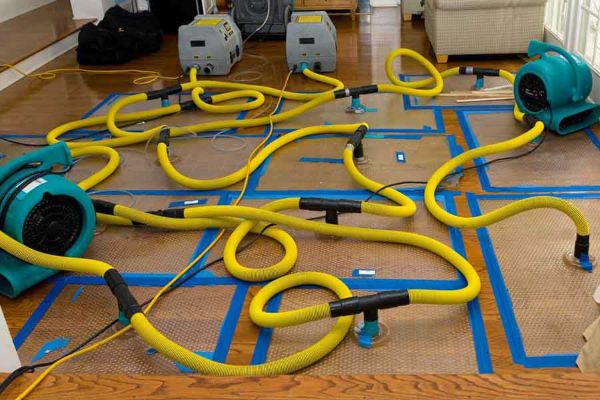
Three types of equipment, each doing a different job. Submersible pumps and extraction units remove the bulk water mechanically, which pulls out far more than evaporation ever could. Air movers then push air across wet surfaces to speed evaporation. Dehumidifiers, usually low grain refrigerant units, pull that evaporated moisture back out of the air so it does not simply resettle somewhere colder in the house.
Running fans without dehumidification is the classic mistake. It moves the water from your floor into your air and then into a cooler room, which is how a leak in one place produces a problem two rooms away.
Measurement is the part that separates a real job from a hopeful one. We use moisture meters on materials and take daily readings, comparing the affected area against an unaffected part of the same property to set the actual target. Thermal imaging helps locate suspect areas quickly, but it reads temperature rather than moisture, so a meter confirms anything it suggests.
Yes, and it is a bigger part of the job than most people expect. We document from the first visit: moisture readings, photographs of everything before it is moved, and a written record of what was removed and why.
That record is what settles a claim quickly or slowly. Adjusters approve scopes faster when the evidence arrives in the format they already use, and the most common reason a claim stalls is missing documentation from the first 24 hours, which is exactly when nobody is thinking about paperwork.
We bill your carrier directly where the policy allows, so you pay your deductible rather than the whole invoice up front. We work with every carrier and we are not on anyone’s preferred vendor list. Those programs run on pre-agreed discounted rates, and the pressure that creates points away from the property owner.
Because the water you can see is the smallest part of the problem. Once a leak stops, what is left behind migrates along the path of least resistance: under baseboards, beneath laminate and engineered flooring, into wall cavities, and along the top of joists to places well away from the original leak.
Materials also hide it differently. Concrete and subfloor release water slowly and can read dry at the surface while still holding a great deal underneath. Drywall wicks upward from the bottom edge, so the wet band is often above the baseboard rather than at floor level. Insulation holds water without showing anything at all.
An inspection with meters finds all of that in an hour. The alternative is discovering it in a month as a stain, a smell, or a floor that has started to cup. The inspection is free, so the only thing it costs you is the hour.
Usually three to five days, sometimes longer. The equipment stays until the meter says the structure is dry, not until the floor feels dry underfoot, because concrete and subfloor give up water slowly and a room can read dry on the surface while the wall cavity behind it is still wet.
We take readings every day and show you the numbers. When they stop moving and hit the target for the material, the gear comes out. If a room is drying slower than it should we tell you why rather than quietly leaving a machine running for another week.
Yes, and the exclusions catch people out far more often than the coverage does.
Gradual damage is the big one. A sudden burst pipe is usually covered; a slow leak that went unnoticed behind a cabinet for months is usually declined as a maintenance issue. The distinction insurers apply is about how long it was happening, not how bad it looks now.
Surface water and groundwater are not covered by a standard homeowners policy at all. Rain that came in across the ground, or water that rose through a slab, needs separate flood insurance.
Sewer and drain backup is normally excluded unless you bought that specific endorsement. It is usually inexpensive to add, and most people discover they do not have it at the worst possible moment.
This is why the first visit matters beyond the drying. We document what we find, with readings and photographs, at the point where the evidence still exists. Once materials have been thrown out, nobody can prove what they were or how wet they got.