

Blown-in insulation Milwaukee County, WI

The cheapest way to stop heating your attic

Blown-in insulation is the best value work you can do on an older Milwaukee house, as long as somebody checks the attic is dry first and seals the gaps before they fill it. Plenty of quotes skip both. We do them in that order, and we show you the numbers.
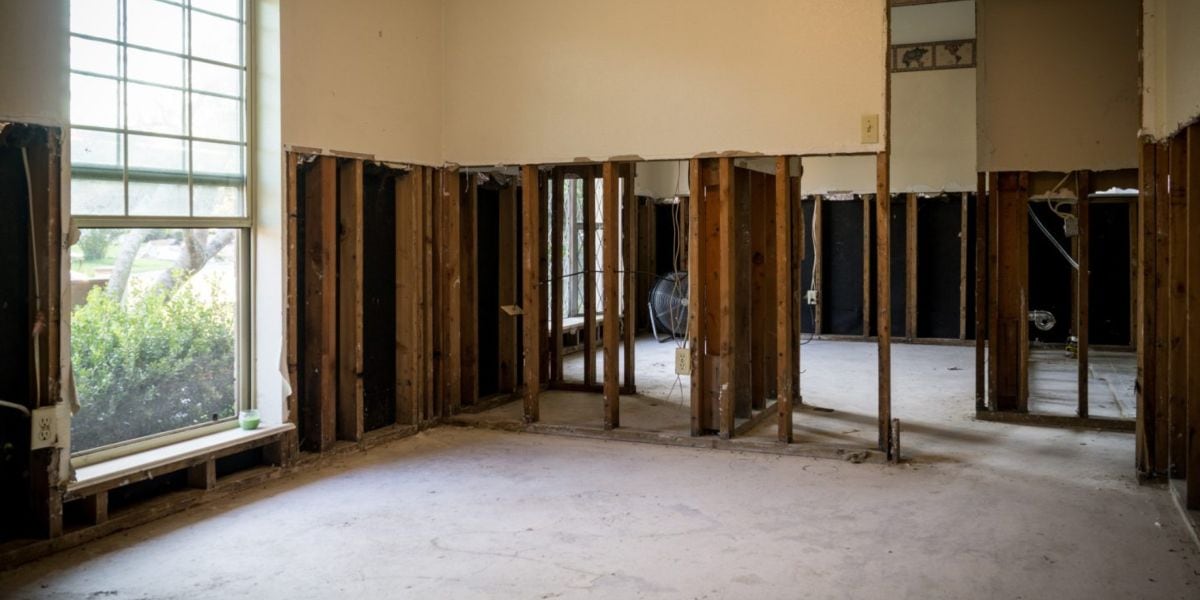
Drywall removed and studs exposed with debris, showing typical water damage restoration in Milwaukee County.

We check before we fill

A moisture meter goes on the framing first. If it reads wet, insulating today just seals the damp in, and we'll tell you so even though it costs us the job.

Air sealing comes first

Insulation slows heat, it doesn't stop air. Open top plates and can lights give away a good share of what you're paying for, so they get sealed before anything goes down.

Baffles are not an extra

Insulation shoved into the eaves blocks the soffit vents, and that's the most common reason a freshly insulated attic starts throwing ice dams. Baffles go in as standard.

You get a number, not a promise

Depth cards across the attic and photos at the end, so the R-value you paid for is one you can go up and measure yourself with a tape.

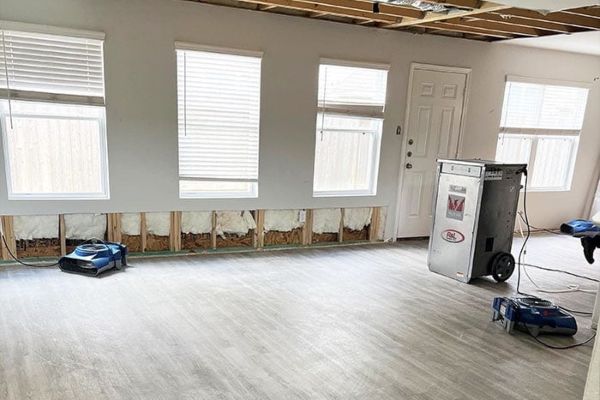
Milwaukee County room with drywall removed, exposed insulation, and drying fans after flood damage.

Blown-in insulation services Milwaukee County, WI

What the job includes

  • Dense-pack cellulose or blown fiberglass, in attics and closed-up walls.
  • A moisture reading on the framing before anything gets filled.
  • Air sealing at the top plates, wiring holes, hatch and can lights first.
  • Baffles at the eaves so the soffit vents stay clear afterwards.
  • Depth cards left across the attic so you can check what went in.
  • Photos and the finished R-value in writing when we’re done.

Attic and wall insulation Milwaukee County

What changes after we've been

Most people notice the comfort before they notice the bill. The upstairs rooms that never held heat start holding it, and the furnace stops working quite so hard on a cold night.

Upstairs rooms that never got warm finally hold heat. That's what people notice first.

Your furnace stops replacing heat that went straight out through the ceiling.

Fewer ice dams, as long as the soffit vents stay clear. Baffles are part of the job.

The depth that went in is marked on the joists and photographed.

Drafts drop, because air sealing happens before the insulation rather than instead of it.

A written R-value for your records, useful if you sell the house or file a claim.

Ready to get started?

A bold white number 1 is centered in a solid black circle, representing top WI water damage restoration.

Share project details

Call us or get a free online quote to help us identify your project needs.

A bold white number 2 stands out in a solid black circle, symbolizing Water Damage Restoration expertise.

We'll follow up

If you requested an online quote, you can expect a callback within 24-48 hours of your request.

A white number 3 on a black circle with light gray background represents WI restoration services.

The floor is yours

Connect with an expert and share all project specifics.

A white number 4 centered in a black circle, symbolizing Water Damage Restoration Milwaukee County.

Plan your project

Like what you hear? We'll provide next steps and expert guidance.

Milwaukee County room with drywall removed, exposed insulation, and drying fans after flood damage.

Cellulose vs fiberglass insulation

Cellulose or fiberglass, and which one your attic wants

Both work, and anybody who only fits one will tell you theirs is better. Cellulose carries more R-value per inch, roughly R-3.2 to R-3.8 against R-2.2 to R-2.7 for loose fill fiberglass, so it hits the depth you need with less material and it packs tight enough to slow air moving through the assembly. In a dry attic with no history of water, it’s usually the better buy. Fiberglass earns its place when the attic has been wet before. Glass doesn’t absorb, so if a leak or an ice dam comes back it won’t turn into a sponge, and it won’t pack down the way cellulose does. If we’re reinsulating after a water damage job or a mold treatment, fiberglass is normally what we put back. There’s a third answer people don’t expect, which is neither of them yet. If the meter reads wet framing, the right thing to do today is nothing, because filling the space seals the damp in. That’s the check most quotes skip, and it’s the one that decides whether this work lasts twenty years or two.

Blown-in insulation cost Milwaukee County, WI

What it costs, and what to ask everyone quoting you

Price comes down to square footage, how deep what’s already there is, how much air sealing the attic needs, and whether anything has to come out first. Tell us the square footage and roughly the build year and we’ll give you a range on the phone. The firm number comes once someone has been up there, and if a quote arrives without anybody going up, that number is a guess at the part that costs money. Most people get three or four quotes for this, which is sensible, so here is what to compare them on. Ask what the moisture reading was, and on which piece of framing. Ask whether air sealing is included or extra. Ask whether baffles are going in at the eaves. Ask for the installed depth in inches rather than just an R-value, because depth is something you can go up and measure afterwards and an R-value is a claim. One more thing worth settling before you collect quotes at all. If the attic has had water in it, get the moisture question answered first. Insulating a damp attic is the one version of this job that costs you twice, because it all comes back out again as an attic insulation removal. That part is what we actually do for a living, and it’s why we’ll sometimes tell you to wait.
Drywall removed and studs exposed with debris, showing typical water damage restoration in Milwaukee County.
Blown-In Insulation FAQs

Common questions about our Blown-In Insulation services

There isn’t one that’s best everywhere, and be careful of anyone who says otherwise, because it usually means it’s the only one they fit. Cellulose gives you more R-value per inch, about R-3.2 to R-3.8 against R-2.2 to R-2.7 for loose fill fiberglass, and it slows air movement better. Fiberglass doesn’t absorb water and doesn’t pack down. For a dry attic with no history, cellulose is normally the better buy. For an attic that’s had a leak, an ice dam or a mold treatment, fiberglass is the safer choice over the long run.
ENERGY STAR puts Zone 6, which covers Milwaukee and most of the state, at R-60 for an attic being done from bare and R-49 where there are already three or four inches up there. In practice that’s about 15 inches of cellulose or nearer 20 of fiberglass. Wisconsin’s building code, SPS 322.32, sets R-49 for ceilings in a new house, with R-38 accepted where the full uncompressed depth carries over the top plate at the eaves. That’s new construction though, so nobody is going to make you bring an existing attic up to it.
Yes, and that’s most of the point of blown-in. We drill a small hole into each stud bay, from the siding outside or from inside where the outside is brick, dense-pack the cavity, then plug and patch it. A lot of Milwaukee houses built before the war have nothing in the walls at all, and filling them is the biggest comfort change you’ll get short of new windows. On an average house it’s a one to two day job.
Cellulose settles, and a decent installer allows for it. Blown at the right density it drops somewhere around 10 to 20 percent in an attic, which is why the installed depth is deliberately higher than the finished target. If a crew blows straight to the target depth on day one, you’re under it by winter. Loose fill fiberglass settles less but shifts more with air movement, which is another reason baffles and even coverage matter.
Usually not. If what’s up there is dry, clean and just shallow, blowing over the top is cheaper and keeps the R-value you’ve already got. It has to come out when it’s wet, packed down, moldy, holding smoke or animal waste, or when it’s vermiculite. We check before we quote, and we’d rather do the smaller job than sell you an insulation removal you don’t need.
It does the opposite, as long as the soffit vents stay clear. Ice dams form when heat leaking into the attic melts snow on the roof and the water refreezes at the cold eave. Keeping that heat in the house is the fix. What causes trouble is insulation pushed into the eaves that blocks the venting, because then the attic stops breathing and you can end up worse off than you started. That’s why baffles go in, and it’s the step that gets left off a cheap quote.
A bold white number 1 is centered in a solid black circle, representing top WI water damage restoration.

Measure and take a reading

We measure what's up there now, put a moisture meter on the framing, and check for staining, gaps, and bath fans venting into the attic instead of out through the roof.

A bold white number 2 stands out in a solid black circle, symbolizing Water Damage Restoration expertise.

Seal the gaps and fit baffles

Top plates, wiring holes, the hatch and can lights get sealed, then baffles go in at the eaves so the soffit venting stays open once the insulation is down.

A white number 3 on a black circle with light gray background represents WI restoration services.

Blow it in and mark the depth

Cellulose or fiberglass spread evenly rather than piled near the hatch, depth cards left across the attic, and photos of the finished depth.