Summary:
What Makes Kitchen Fire Damage Different
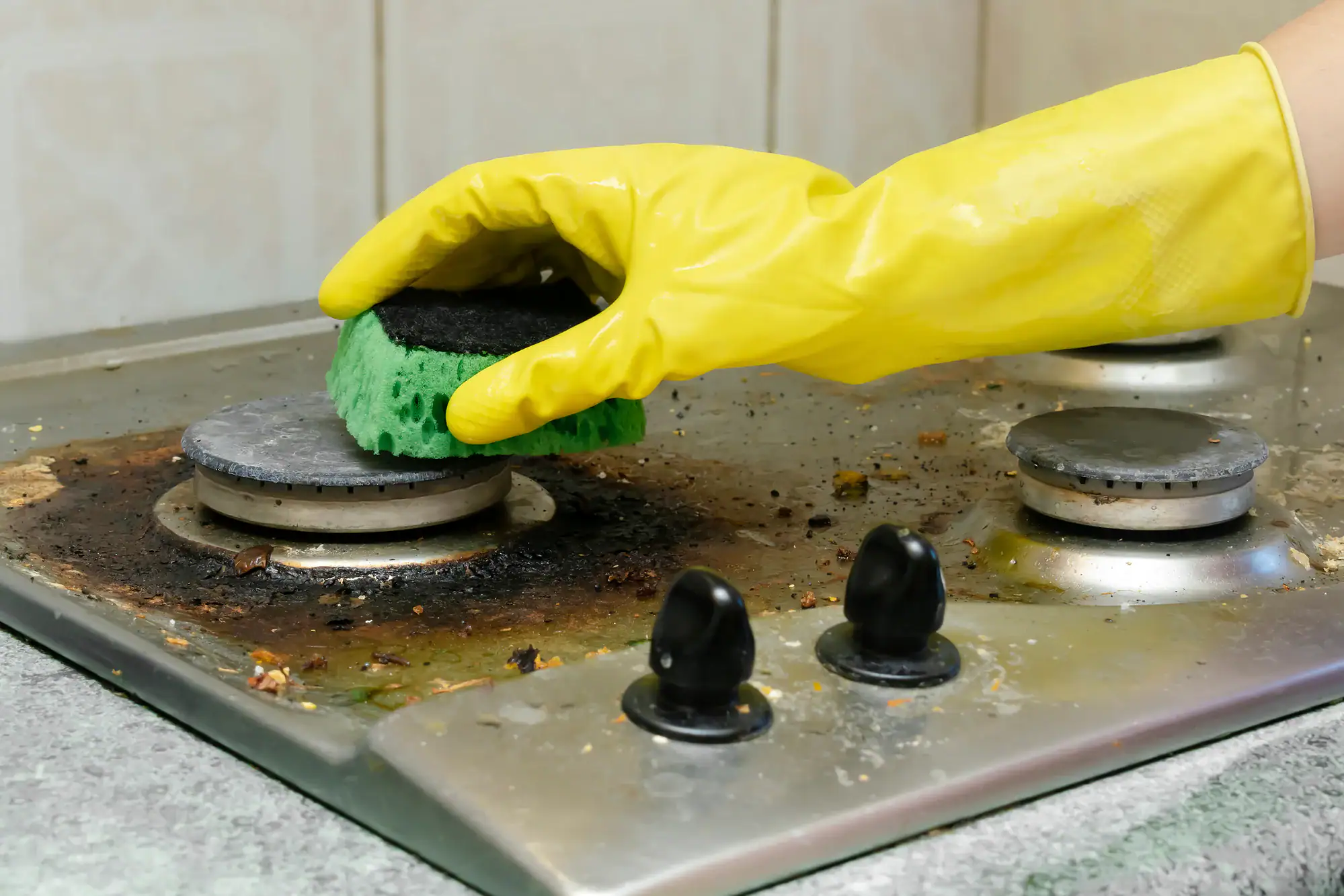
Not all fires leave the same kind of mess. A wood fire creates dry, powdery soot that’s relatively straightforward to clean. A kitchen fire involving meat, oils, or other organic materials creates something else entirely: protein soot. This type of residue is sticky, greasy, and nearly invisible at first. You might not even see it on your walls or cabinets right away.
But you’ll smell it. That distinct, unpleasant odor—somewhere between burnt food and spoiled meat—is your first clue that protein soot has settled throughout your kitchen and likely beyond. The grease particles are so fine they travel through your HVAC system, settling in rooms that weren’t anywhere near the fire. Within days or weeks, you’ll start noticing a yellowish-brown discoloration on surfaces that looked fine initially.
The real problem is how protein soot bonds to materials. Unlike dry soot that sits on surfaces, protein residue penetrates porous materials like drywall, wood, and fabric. It creates a varnish-like coating that gets harder to remove the longer it sits. Standard household cleaners aren’t formulated to break down these protein-based oils, which is why scrubbing with regular products just pushes the residue deeper or spreads it to clean areas.
Why household cleaners fail on protein soot
You’ve probably already discovered this the hard way. You spray down a greasy wall with your go-to kitchen cleaner, wipe it with a cloth, and the cloth comes away dirty. Progress, right? Not exactly. What’s actually happening is you’re redistributing the protein oils across a larger surface area and potentially driving them deeper into porous materials.
Most household cleaners are designed for regular dirt, dust, and light grease from everyday cooking. They’re not engineered to break down the complex protein chains and carbonized oils that form during a fire. When organic materials like meat or cooking oils burn, they create a molecular structure that requires specific enzymes or solvents to dismantle. Without the right chemistry, you’re just moving the problem around.
There’s also the issue of what you can’t see. Protein soot doesn’t just coat visible surfaces. It gets into air ducts, behind cabinets, inside light fixtures, and within wall cavities through any small gap or opening. When you run your heating or cooling system, it circulates these particles throughout your home. That’s why the smell seems to come back even after you’ve cleaned every visible surface. You’re not imagining it—the contamination is more widespread than it appears.
Attempting DIY cleanup can actually create additional problems. Using too much water or the wrong cleaning agents can damage finishes, cause wood to swell, or create conditions for mold growth. Insurance companies also take note of improper cleaning attempts, which can complicate claims if the damage worsens as a result. The cost of doing it wrong often exceeds the cost of hiring professionals from the start.
How protein soot spreads through your home
Here’s what happens in the minutes and hours after a kitchen fire. Hot smoke rises and spreads outward, carrying microscopic particles of grease and protein throughout your home. These particles are small enough to travel through ductwork, under doors, and through any opening in your home’s envelope. They settle on every surface they encounter, often in rooms you wouldn’t expect.
Your HVAC system becomes a distribution network for contamination. When the system runs, it pulls smoky air through return vents, past your filter (which isn’t designed to capture these fine particles), through the ductwork, and back out into your living spaces. This is why you might smell smoke in your bedroom even though the fire was contained to the kitchen. The odor isn’t traveling through the air naturally—it’s being mechanically circulated by your heating and cooling system.
Fabrics are particularly vulnerable. Curtains, upholstery, carpets, and clothing absorb protein soot readily and hold onto the odor tenaciously. The porous nature of these materials allows the greasy residue to penetrate deep into fibers, where it continues to emit odors for weeks or months if not properly treated. Simply washing affected items in a regular laundry cycle won’t cut it. The oils need to be broken down with specialized detergents and processes before they’ll release from the fabric.
Then there’s the hidden damage. Protein soot that settles on metal surfaces can cause corrosion over time. The acidic nature of the residue etches into finishes and can compromise the structural integrity of certain materials if left untreated. Painted surfaces may show yellowing or discoloration weeks after the fire as the oils continue to leach through the paint. Wood veneer on cabinets can crack and peel as the protein residue breaks down the adhesives and finishes. What looks like minor surface contamination today can become permanent damage if you wait too long to address it properly.
The timeline matters more than most people realize. In the first 24-48 hours after a fire, protein soot is at its most removable. As hours turn into days and then weeks, the residue undergoes chemical changes that make it progressively harder to eliminate. It cross-links with surface materials, essentially becoming part of the substrate rather than a contaminant sitting on top of it. This is why professional fire damage restoration emphasizes rapid response—not as a sales tactic, but because the chemistry of soot remediation is time-sensitive.
Professional Fire Damage Repair Process
Professional kitchen fire restoration follows a systematic approach that addresses both visible damage and hidden contamination. It’s not about making things look clean—it’s about actually removing the contaminants at a molecular level and ensuring your home is safe for your family.
The process starts with a thorough assessment. Trained technicians evaluate the extent of smoke migration, test surfaces for contamination levels, and identify all affected areas including those you might not have noticed. They’re looking for soot in HVAC systems, behind wall plates, inside cabinets, and in other spaces that aren’t immediately obvious. This assessment informs the scope of work and helps establish realistic timelines and costs.
Once the assessment is complete, the real work begins. This isn’t a quick afternoon project. Depending on the extent of damage, proper fire damage cleanup can take anywhere from a few days to several weeks. The timeline depends on how far the smoke traveled, how much content needs to be cleaned or removed, and whether any reconstruction is required.
Specialized equipment and techniques for soot removal
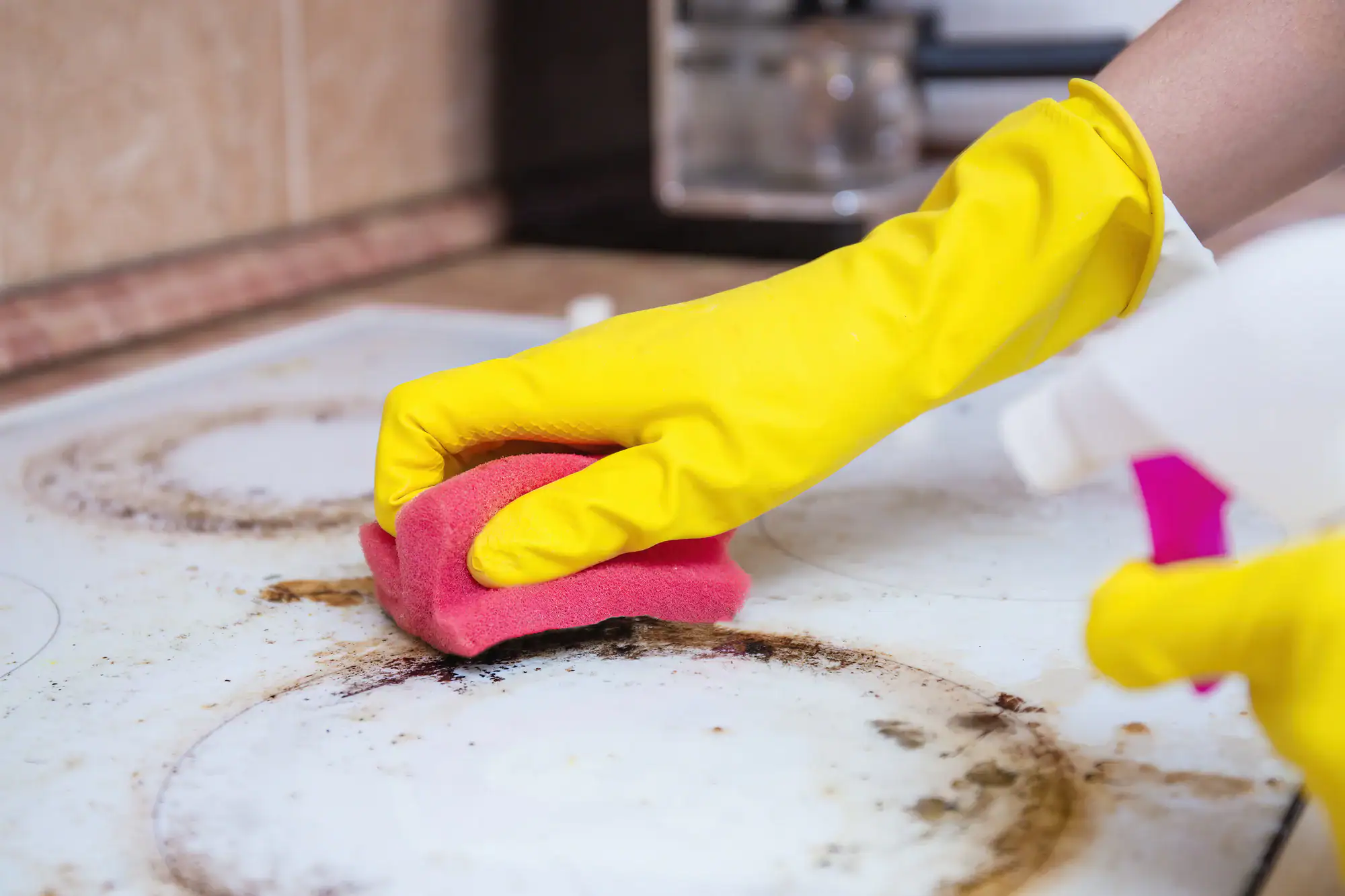
Professional fire restoration relies on equipment and methods you won’t find at your local hardware store. We’re talking about industrial-grade tools designed specifically for fire damage scenarios. HEPA air scrubbers run continuously to capture airborne soot particles and prevent them from resettling on cleaned surfaces. These aren’t the same as the air purifiers you can buy for your bedroom—they’re powerful machines capable of filtering thousands of cubic feet of air per hour.
Enzyme cleaners are the backbone of protein soot removal. These specialized solutions contain biological catalysts that break down protein chains and fats at a molecular level. Unlike detergents that simply surround and lift dirt, enzymes actually digest the organic compounds in protein soot, converting them into simpler molecules that can be rinsed away. Different enzymes target different types of proteins, which is why we maintain a range of cleaning agents for various scenarios.
Thermal fogging is another technique that surprises most homeowners. A thermal fogger heats a deodorizing solution until it vaporizes into a fine mist that mimics the behavior of smoke. This allows the deodorizer to penetrate all the same spaces that smoke reached—behind walls, into ductwork, through insulation. The fog particles are small enough to reach areas that can’t be physically accessed for cleaning. Once there, they neutralize odor molecules through chemical bonding rather than just masking the smell.
For particularly stubborn odors, ozone treatment or hydroxyl generation might be necessary. These methods work by creating reactive molecules that chemically alter odor-causing compounds, essentially destroying them at a molecular level. Ozone treatment requires the home to be vacant during the process, as ozone can be harmful to breathe. Hydroxyl generators are a newer technology that accomplishes similar results but is safe for use in occupied spaces. The choice between these methods depends on the severity of odors, the timeline for restoration, and whether you can temporarily relocate.
Content cleaning is its own specialized field within fire restoration. Furniture, clothing, electronics, and personal items all require different approaches. Upholstered furniture might be cleaned on-site with specialized extraction equipment, or it might need to be removed to a facility for more intensive treatment. Clothing typically requires dry cleaning with additives specifically formulated for smoke odor. Electronics need careful attention because soot can cause corrosion on circuit boards and connections—simply wiping down the exterior isn’t sufficient.
HVAC system cleaning is non-negotiable after a kitchen fire. Every inch of ductwork needs to be cleaned to remove soot deposits, and in some cases, sections of ductwork may need to be replaced if the contamination is too severe. The furnace or air handler itself requires detailed cleaning, including the blower motor, coils, and any filters or media. Skipping this step means you’ll continue to smell smoke every time your system runs, and you’ll be circulating contaminated air throughout your home.
Timeline and cost expectations for kitchen fire restoration
One of the first questions homeowners ask is how long this is all going to take. The honest answer is that it depends on the scope of damage, but here’s a general framework. For a kitchen fire that was quickly extinguished and contained to one room, you’re looking at roughly one to three weeks for complete restoration. This includes initial cleanup, content cleaning, odor elimination, and any necessary repairs to surfaces or finishes.
More extensive fires that affected multiple rooms or caused structural damage can extend the timeline to several months. If drywall needs to be replaced, if cabinets were damaged beyond cleaning, or if there’s water damage from firefighting efforts that requires drying and mold prevention, each of these factors adds time to the project. Reconstruction work—replacing cabinets, repainting, installing new flooring—follows the cleaning phase and operates on a different timeline.
Cost is the other major concern, and it varies widely based on the extent of damage. Minor kitchen fire cleanup might run a few thousand dollars, while extensive restoration involving multiple rooms and reconstruction can reach $12,000 or more. Most homeowners insurance policies cover fire damage restoration, which takes a significant financial burden off your shoulders. The key is documenting everything properly and working with a restoration company experienced in insurance claims.
Speaking of insurance, the claims process is smoother when you work with professionals who understand what insurance companies need. Detailed photo documentation, comprehensive scope of work, itemized estimates, and clear communication with adjusters all contribute to faster claim approval. We work directly with your insurance company, handling much of the back-and-forth communication so you don’t have to become an expert in insurance policy language while dealing with the aftermath of a fire.
One aspect of cost that surprises people is the value of rapid response. The longer you wait to begin professional restoration, the more damage occurs and the more expensive the project becomes. Protein soot that sits for weeks becomes harder to remove, meaning more intensive (and costly) cleaning methods are required. Odors that penetrate deeply into materials might necessitate replacement rather than cleaning. Water damage from firefighting efforts can lead to mold growth if not addressed within 24-48 hours, adding an entirely separate remediation project to your plate.
There’s also the question of whether you can stay in your home during restoration. For minor kitchen fires, you might be able to remain in the house while work is being done, though you’ll need to tolerate some disruption and potentially limited access to certain areas. For more extensive damage, especially if there are concerns about air quality or if major reconstruction is required, temporary relocation might be necessary. Your homeowners insurance typically covers additional living expenses in these situations, so you’re not paying out of pocket for a hotel or rental.
The restoration process isn’t just about removing visible soot and repairing damaged surfaces. It’s about returning your home to a safe, healthy environment where you’re not breathing residual contaminants or living with persistent odors. Professional fire damage repair in Greendale, WI and throughout Milwaukee County involves certified technicians, specialized equipment, proven methodologies, and attention to both the obvious and the hidden aspects of fire damage. It’s a comprehensive process because anything less leaves you with incomplete restoration and ongoing problems.
Getting your home back to normal after a kitchen fire
Kitchen fires are more common than most people realize, and the aftermath is more complex than it appears. Protein soot and grease damage require professional intervention because the chemistry and physics of fire contamination don’t respond to household cleaning methods. Attempting to handle it yourself often leads to spreading the contamination, driving it deeper into materials, or creating additional problems that complicate the restoration process.
The good news is that with proper professional fire damage repair, your home can be fully restored. The smell will actually go away. The greasy residue will be eliminated, not just moved around. Your HVAC system will distribute clean air instead of recirculating contaminants. It takes time, specialized equipment, and expertise, but complete recovery is absolutely achievable.
If you’re dealing with the aftermath of a kitchen fire in Greendale, WI or anywhere in Milwaukee County, the most important step is reaching out to experienced professionals quickly. The sooner restoration begins, the better the outcome and the lower the overall cost. We have the training, equipment, and local knowledge to handle kitchen fire cleanup from start to finish, working with your insurance company and keeping you informed throughout the process. Your home can be restored properly—you just need the right team to make it happen.