
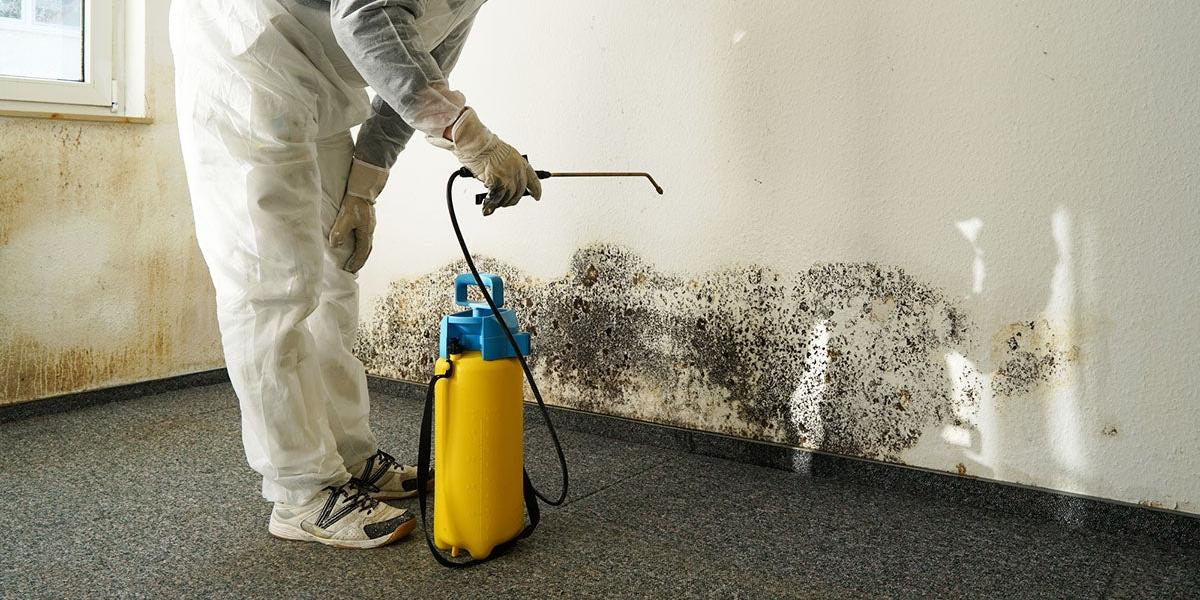
Summary:
Where Mold Hides After Your Basement Floods
Mold doesn’t grow where you’re looking. It grows where it’s dark, damp, and undisturbed.
After a basement flood in older Milwaukee County homes, moisture seeps into places you’d never think to check. Behind the drywall. Under vinyl flooring. Inside insulation that looks dry on the outside. Even in the ductwork of your HVAC system.
You might have cleaned every visible surface, but that doesn’t mean you’re in the clear. Mold needs three things: moisture, organic material, and time. Your basement just gave it all three.
Behind Walls and Inside Insulation
This is where most hidden mold problems start. When floodwater soaks drywall, it doesn’t just wet the surface. It saturates the gypsum core and any insulation behind it.
Even after the front of the wall dries, moisture stays trapped inside. Mold spores, which are always present in the air, land on that damp surface and start growing. Within a week, you’ve got a colony spreading through the wall cavity.
You won’t see it. But you might smell it—that musty, earthy odor that doesn’t go away no matter how much you clean. Or you might notice discoloration creeping up from the baseboard. By then, the problem is bigger than you think.
Professional mold remediation in Milwaukee, WI involves cutting into walls to check moisture levels with specialized meters. If the reading is above 16%, mold is likely already growing. That’s not something a can of bleach will fix. The drywall has to come out. The insulation has to be replaced. And the source of moisture has to be addressed, or it’ll just come back.
Older homes in Greendale and Milwaukee County—especially those with stone or brick foundations—are particularly vulnerable. Those foundations weren’t built with modern moisture barriers. Water finds its way in through cracks, cold joints, and porous materials. Once it’s inside the wall, it’s not drying out on its own.
Under Flooring and Carpet Padding
Carpet padding is basically a sponge. When your basement floods, it absorbs water and holds onto it long after the carpet itself feels dry to the touch.
That padding sits directly on concrete, which means airflow is limited. It’s the perfect environment for mold. And because you can’t see what’s happening underneath, most homeowners don’t realize there’s a problem until they start smelling it—or until someone in the house starts having respiratory issues.
Even if you pulled up the carpet and let it dry, the padding underneath may still be wet. And if the concrete slab absorbed water, it’s releasing moisture back into whatever’s on top of it. That’s why basement mold removal often requires more than just ripping out carpet. The slab needs to be tested for moisture. The subfloor (if there is one) needs to be inspected. And any materials that stayed wet for more than 48 hours need to go.
Vinyl flooring and laminate aren’t much better. Water seeps into the seams and gets trapped underneath. You won’t see it buckling right away, but mold is growing in that dark, damp space between the floor and the concrete. By the time the floor starts to warp or smell, you’re looking at a full replacement.
Professional mold mitigation includes moisture mapping—using infrared cameras and moisture meters to find hidden water you can’t see or feel. That’s how you catch mold before it becomes a health hazard. It’s also how you avoid tearing out materials that are actually fine and can be saved.
Signs You Have Hidden Mold Growth
Mold doesn’t always announce itself. But if you know what to look for, the signs are there.
The most obvious one is smell. If your basement has a persistent musty odor—even after cleaning—you’ve got mold growing somewhere. It might be behind a wall, under the floor, or in your ductwork. But it’s there.
Discoloration is another red flag. Dark spots on walls or ceilings. Staining along baseboards. Fuzzy patches in corners or along the foundation. Even if it doesn’t look like classic black mold, it’s still a problem.
Health Symptoms That Point to Mold Exposure
Sometimes the first sign of hidden mold isn’t in your basement—it’s in how your family feels. Mold releases spores and mycotoxins into the air. When you breathe them in, your body reacts.
Common symptoms include persistent coughing, sneezing, or a runny nose that won’t go away. Itchy, watery eyes. Skin rashes. Headaches. Fatigue. If someone in your household has asthma, you might notice their symptoms getting worse, even when they’re not around known triggers.
These symptoms often get dismissed as allergies or a lingering cold. But if they started after your basement flooded—and they don’t improve when you leave the house—mold exposure is a real possibility.
People with weakened immune systems, chronic lung conditions, or young children are especially vulnerable. Milwaukee County health officials have specifically warned about mold risks after the area’s historic flooding events. For individuals with COPD, asthma, or immune compromise, mold isn’t just an inconvenience. It’s a legitimate health threat.
A black mold inspection doesn’t just look for visible growth. It tests air quality to measure spore levels in your home. If those levels are elevated, you’ve got mold growing somewhere—even if you can’t see it. That’s when professional mold removal becomes necessary, not optional.
Trying to live with it or mask the smell with air fresheners doesn’t make the problem go away. It just gives the mold more time to spread. And the longer it grows, the more expensive and invasive the remediation process becomes.
Visible Clues: Stains, Discoloration, and Texture Changes
Mold doesn’t always look like the dramatic black patches you see in horror stories. Sometimes it’s subtle. A slight discoloration on the drywall. A chalky white residue on the foundation. A bit of fuzz in the corner where the wall meets the floor.
Stains that appear after flooding—especially if they’re growing or changing color—are a strong indicator of mold. Water stains on the ceiling or upper walls can mean moisture is traveling through the structure, which often leads to mold growth in hidden areas.
Peeling paint or wallpaper is another sign. When moisture gets trapped behind these surfaces, it breaks down the adhesive. Mold follows. You might peel back a corner of wallpaper and find a thriving colony underneath.
Warped or bulging drywall means water has compromised the material. And where there’s prolonged moisture in drywall, there’s almost always mold. Even if you don’t see it on the surface, it’s growing inside the wall cavity.
Efflorescence—a white, powdery substance on concrete or brick—is often mistaken for mold. It’s actually mineral deposits left behind when water evaporates. But here’s the thing: if you’re seeing efflorescence, it means water is moving through your foundation. And that water is creating conditions for mold to grow nearby.
Professional mold remediation services in Greendale and Milwaukee County use visual inspections combined with moisture testing to determine the full scope of the problem. What looks like a small patch of mold on the surface might be connected to a much larger issue behind the wall. That’s why guessing or assuming you’ve handled it rarely works out.
When to Call for Professional Mold Removal
If the affected area is larger than 10 square feet, you’re beyond DIY territory. If you’re smelling mold but can’t find it, you need professional detection. If anyone in your home is experiencing unexplained respiratory symptoms, don’t wait.
Basement mold removal isn’t just about scrubbing surfaces. It’s about finding the source, containing the spread, removing contaminated materials, and preventing it from coming back. That requires equipment, training, and experience most homeowners don’t have.
We understand how quickly mold takes hold after basement flooding in older Milwaukee County homes. Our IICRC-certified technicians use moisture meters, infrared cameras, and air quality testing to find hidden mold and eliminate it at the source—not just cover it up.