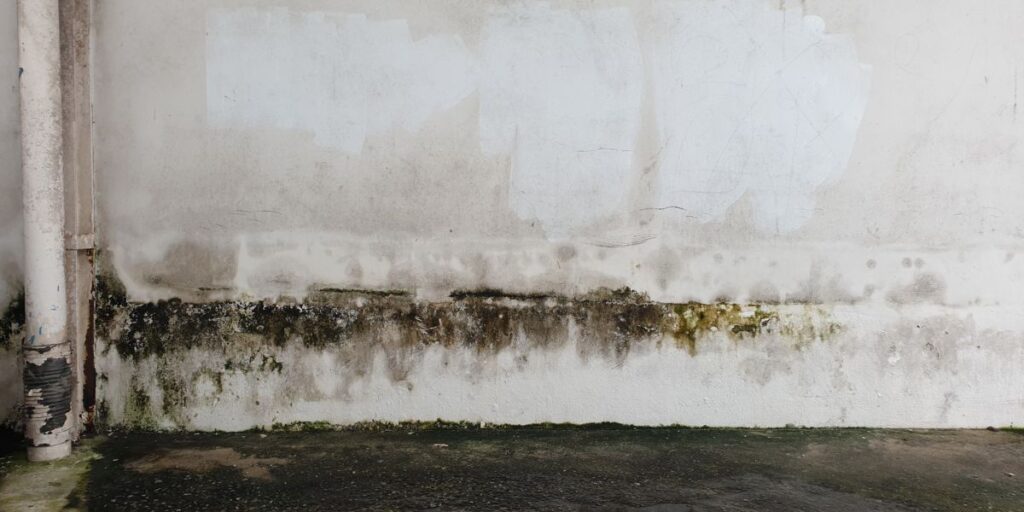
Water damage restoration in Milwaukee is four jobs in order: stop the water, pull out what is standing, dry the structure until the meters read dry, then rebuild what could not be saved. Flood Guys answer 24/7, usually inside 60 minutes.
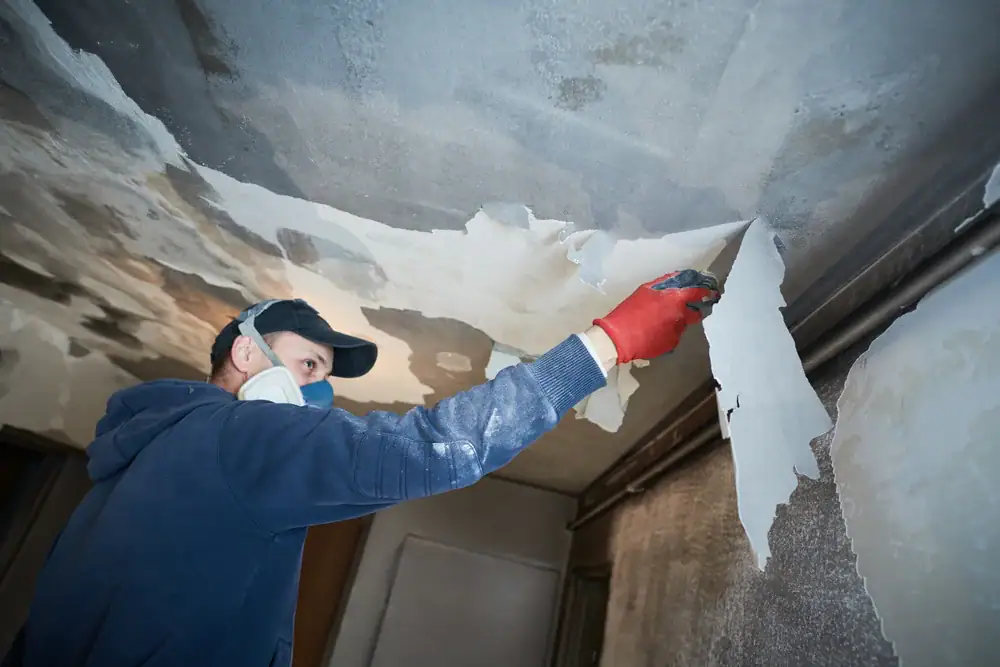
When water damage strikes, prompt action is essential to prevent further complications and restore your property. Our 24/7 emergency water damage restoration team is always ready to respond quickly, minimizing damage and ensuring a thorough recovery.
Rapid Water Extraction: Utilizing industrial-grade pumps and vacuums, we quickly remove standing water to prevent structural weakening and mold growth.
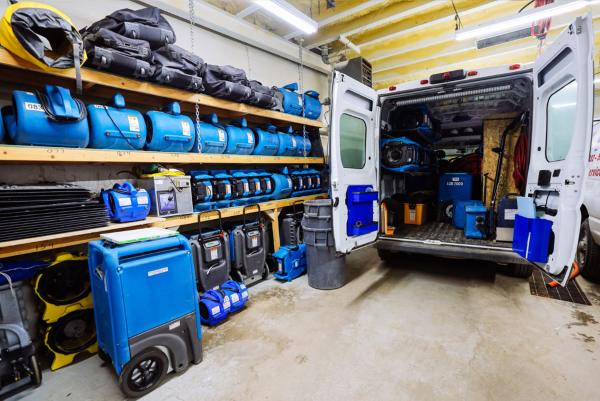
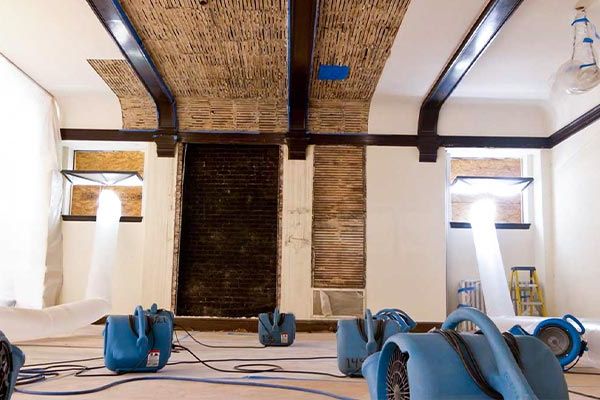
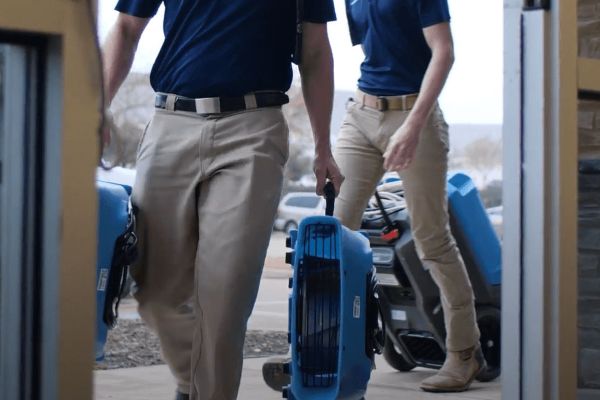
Advanced Drying Techniques: We use high-powered air movers and professional dehumidifiers to pull moisture from deep within walls, floors, and carpets.
Complete Property Restoration: Our goal isn’t just to dry the area; we work to restore your property to its original, pre-damage condition.
Expert Damage Assessment: Our skilled professionals identify hidden moisture pockets using advanced thermal imaging and moisture meters to ensure a thorough recovery.
Proven Mitigation Strategies: We employ industry-leading techniques to minimize long-term complications, protecting both your property and your peace of mind.
Water gets into a Milwaukee basement in three main ways. Which one it is decides what can be dried and saved, and what has to come out.
Wisconsin winters do this one. A pipe in an unheated crawl space, an exterior wall or a garage freezes, the ice expands, and the split does not show until it thaws. A supply line then runs at full pressure until someone shuts the main.
Heavy rain and fast snowmelt push more water into Milwaukee’s sewers than they can move, and in the older parts of the city cracked laterals let groundwater in as well. That is why basements here flood through the floor drain, not the door.
Ice dams are the local version. Snow melts off a warm roof, refreezes at the cold eaves, and backs water up under the shingles. The stain on the ceiling is almost always smaller than the wet insulation sitting above it.
Four phases, and each one gates the next. Skipping ahead is what turns a dry-out into a rebuild.
1. Assess and stop the source. The water gets shut off first, then we map how far it actually traveled with moisture meters rather than by eye. This is also where the water gets categorized, because that decides everything downstream: category 1 is clean supply water and most of what it touched can be dried in place, category 2 carries contaminants and soft materials usually go, category 3 is grossly contaminated and porous materials are not salvageable at any drying speed. Clean water does not stay clean either, degrading toward category 2 within a couple of days.
2. Extract. Submersible pumps for standing water, then extraction units for what is held in carpet, pad and the top of the subfloor. Mechanical extraction pulls out far more water than evaporation ever will, which is why we spend time here rather than rushing to set fans.
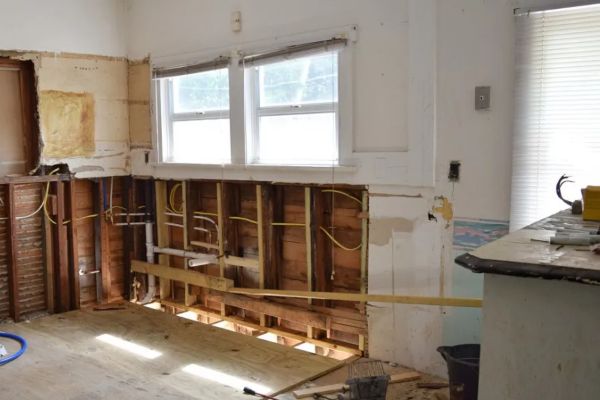
3. Dry to a measured target. Air movers speed evaporation, dehumidifiers pull that moisture out of the air so it does not resettle in a cooler room. Where water is trapped inside a wall cavity or under a floating floor we open it up: weep holes at the base of the drywall, baseboard off, a section of flooring lifted. It looks destructive and it is the opposite, because it is what saves the wall from replacement. Readings are taken daily against an unaffected part of the same property.
4. Restore. Only once the numbers hit target does anything get closed up. Then drywall, flooring, trim and paint, finished to match the rest of the house, and a walkthrough with you before the job closes.
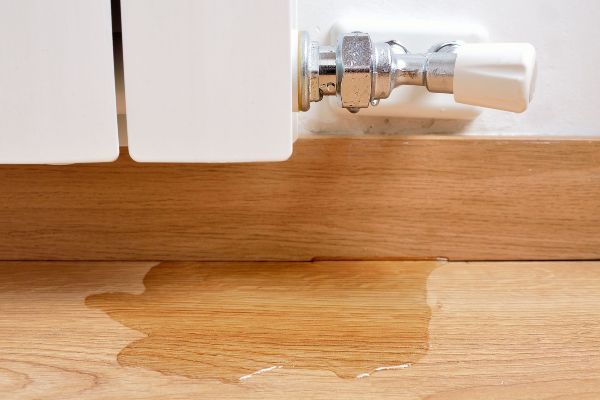
Don’t let water damage disrupt your life. Contact us now to schedule your emergency response plan. Being prepared can significantly minimize damage and ensure a swift recovery.
Usually yes for sudden damage, and the exclusions are where people get caught.
Most homeowners policies cover water damage that is sudden and accidental: a burst supply line, a failed appliance hose, a water heater letting go. Emergency mitigation, meaning the extraction and drying that stops the damage spreading, is normally covered and expected, because a slow response costs the insurer more too.
Three exclusions come up constantly in Milwaukee County. Gradual damage, such as a slow leak behind a cabinet that went unnoticed for months, is usually declined as a maintenance issue; the test insurers apply is how long it was happening, not how bad it looks now. Surface water and groundwater are not covered by a standard policy at all and need separate flood insurance, which carries a waiting period and so cannot be bought once rain is forecast. Sewer and drain backup is excluded unless you bought that endorsement, which is inexpensive and which most people discover they lack at the worst moment.
What actually decides a borderline claim is documentation from the first visit. We record readings, photograph everything before it moves, and log what was removed and why, in the format adjusters expect. We bill your carrier directly where the policy allows, work with every carrier, and are not on anyone’s preferred vendor list.
Standing water is the obvious problem and the smaller one. What actually drives the cost is where the water goes next, and it starts moving immediately.
Within hours it has wicked up the inside face of the drywall, soaked the insulation in the cavity, and moved into the subfloor. Within roughly 24 to 48 hours of materials staying wet, mold can begin to establish. That window is what the entire emergency phase is built around.
There is a second clock too. Category 1 clean water degrades toward category 2 as it sits against dirty materials, so a loss that could have been dried in place on day one becomes a removal job by day three. Speed is not a sales line here, it is the difference between drying a room and rebuilding it.
Household fans move air across a surface. That is one third of drying, and on its own it makes things worse in a specific way.
Evaporation puts the water into the air. Without dehumidification that humid air simply travels to a cooler part of the house and condenses there, which is how a leak in the kitchen produces a musty smell in a bedroom two rooms away. You have not removed the water, you have relocated it.
Proper drying uses three things together: mechanical extraction to remove the bulk, air movers to speed evaporation from the remaining materials, and commercial dehumidifiers sized to the space to pull that moisture out of the air. Then measurement, because the equipment should leave when meter readings hit target rather than when the floor feels dry underfoot. Concrete and subfloor give up water slowly and routinely read dry at the surface while still holding a great deal underneath.
It comes down to the water category and how long it sat, not to how bad the carpet looks.
With category 1 clean water reached quickly, the carpet can often be saved while the pad underneath is replaced, since the pad holds far more water and costs little. With category 2, the pad goes and the carpet is a judgment call. With category 3, which includes any water that came in across the ground or from a sewer, both come out and so does anything else porous that absorbed it. That is not caution, it is contamination.
Time matters as much as category. Even clean water degrades as it sits, so the same carpet is a save on day one and a removal on day three.
Whatever leaves gets photographed and listed on the way out, because your contents claim is built from that record and it cannot be reconstructed from memory once the dumpster has gone.
Two different trades, and knowing the split protects you.
Mitigation is the emergency phase: stopping the source, extracting, removing what cannot be saved, and drying the structure to a measured target. It is urgent, it usually runs a few days to a week, and it is the part insurers most reliably cover because it limits their loss too.
Restoration is the rebuild: drywall, flooring, insulation, trim, paint, putting the property back. It is not urgent in the same way, and it cannot start until the mitigation readings say the structure is genuinely dry. Closing a wall over damp framing is the single most expensive mistake in this trade, because the moisture has nowhere to go and the first sign of trouble is a smell months later.
Plenty of companies do only the first half and hand you to somebody else for the second. That handoff is where jobs stall: two schedules, two invoices, and each side pointing at the other if something was closed up wet. We run both with one project manager throughout.
Moisture mapping, and the honest answer is that the meter decides rather than the technician.
Every affected material is read and compared against an unaffected area of the same property, because dry is relative to your building rather than a fixed number. Different materials also behave differently: drywall wicks upward from its bottom edge so the wet band sits above the floor, concrete and subfloor release water slowly and read dry on top while still saturated underneath, and insulation holds water without showing anything at all.
Thermal imaging helps scan a large area quickly for suspect spots, but it reads surface temperature rather than moisture, so anything it flags gets confirmed with a meter before it goes in the scope.
Materials that are structurally sound and reading within target get dried in place. Materials that are saturated, delaminating or contaminated come out. If a line is on the scope, we can show you the reading behind it.
Insurers work from evidence, and most of the evidence that matters only exists in the first 24 hours.
What we log: moisture readings at the initial assessment and daily through drying, photographs of every affected area before anything moves, an itemized record of what was removed and why, and the equipment placed with its run time. That set is what an adjuster approves a scope from.
The most common reason a claim stalls is missing documentation from exactly the moment nobody is thinking about paperwork. Once wet carpet and ruined contents are on the drive, nobody can prove what they were or how wet they got, and a contents claim reconstructed from memory is worth a fraction of one built from photographs.
We provide it in the format carriers expect and bill them directly where your policy allows, so you pay your deductible rather than the whole invoice up front.
While waiting for our team to arrive, consider these helpful tips to manage the situation:
If safe, turn off the main water supply, gas, and electricity to prevent further damage and hazards.
Relocate important documents, electronics, and personal items to a dry, safe area to reduce potential loss.
Take photos or videos of the damage for insurance purposes, assisting in filing claims and ensuring proper coverage.
If you need to enter the affected area, wear protective gear like gloves and boots to safeguard against contaminants.
Stay clear of standing water, as it can be deeper and more hazardous than it appears.
Contact your insurance provider to report the damage and initiate the claims process as soon as possible.
If you’re facing water damage or have questions about our restoration services, don’t hesitate to reach out! Our dedicated team is here to assist you. Contact us today to discuss your needs, schedule a consultation, or get a free inspection. Let us help you on your path to recovery!